Ruhollah Khomeini Quotes
In the Islamic government all people have complete freedom to have any kind of opinion.
Khomeini, Ruhollah. Interview with Reuters, 26 Oct. 1978. Sahifeh-ye Imam, vol. 4, The Institute for Compilation and Publication of Imam Khomeini's Works, 2001, p. 162.


This is a classic Egyptian political technique. Egyptian political leaders espouse democratic values and endorse human rights, but control and regulate the actual exercise of rights so that “unacceptable” groups or people can never really assemble or protest. They make an application to demonstrate and find themselves arrested or “detained” so the Egyptians can say that no one is refused the right to assemble. Their permit was not denied.


Said, one of the leading American academic intellectuals and an Arab, was together with many other Muslim intellectuals, anguished at the lack of basic intellectual freedom in most Muslim nations and all Arab countries. The only Middle Eastern country in which Arabs had freedoms of expression political and otherwise was at the time, ironically Israel.


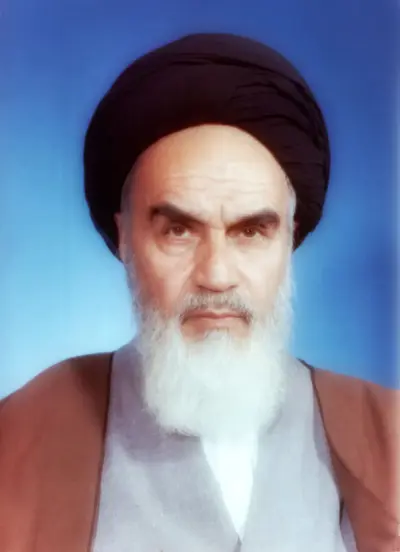
Sayyid Ruhollah Musavi Khomeini, also known in the Western world as Ayatollah Khomeini, was an Iranian political and religious leader. He was the founder of the Islamic Republic of Iran and the leader of the 1979 Iranian Revolution, which saw the overthrow of the last Shah of Iran, Mohammad Reza Pahlavi, and the end of the 2,500-year-old Persian monarchy. Following the revolution, Khomeini became the country's Supreme Leader, a position created in the constitution of the Islamic Republic as the highest-ranking political and religious authority of the nation, which he held until his death. Most of his reign was taken up by the Iran–Iraq War of 1980–1988. He was succeeded by Ali Khamenei on 4 June 1989.
