Walter Cronkite Quotes
In the early stages of our involvement in Vietnam, basically I felt that our course was right. My concern grew with the concern of the American people.
Cronkite, Walter. A Reporter's Life. Alfred A. Knopf, 1996.

sending American troops to Vietnam


Boggs was working on some compromise positions that could be taken by the party at the 1968 Democratic National Convention to provide the anti war wing of the party with something. The President found out and met with Congressman Boggs.


The Gallup poll at the time showed that 85% of the American public favored use of the atomic bomb.
President Polk and General Zachary Taylor will not He was the last President before Texas became a State. Most of us are surprised that the Texas President opposed the Mexican War.


Chomsky was not asserting this statement as the truth. He was making the statement assuming that the absurdity of it would be clear to the listener and they would also realize that was what the then government policy was. North Vietnamese had infiltrated the South and had much support in many of the South Vietnamese villages. When the U. S. bombed the North Vietnamese—and the Vietnamese inhabitants—of those villages, the intention was indeed to help the South Vietnamese. If Chomsky were a politician running for office, his opponent might well have taken this quote and used it to “prove” that Chomsky supported the American effort in the Vietnam War when he was a vehement opponent.


He was discussing the conflict in the Ukraine between keeping their historical economic relationships with Russia and being more involved with Europe and the West. He observed that the Ukraine has been for centuries not only and integral part of Russia but played a huge role in the Russian Revolution of 1917. Kissinger urged Ukraine independence and relations with both Russia and Europe and not making the Russians feel that they have little or no influence over what was not very long ago a critical part of their country.


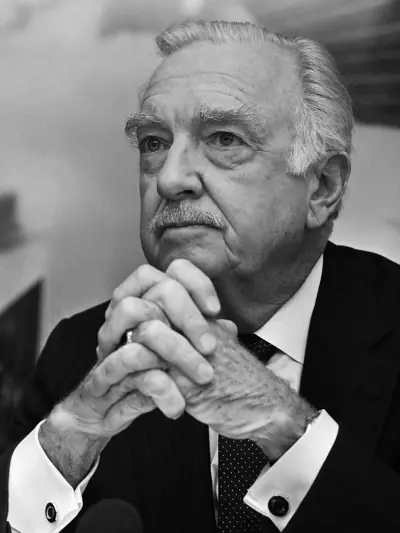
Walter Leland Cronkite Jr. was an American broadcast journalist who served as anchorman for the CBS Evening News for 19 years (1962–1981). During the 1960s and 1970s, he was often cited as "the most trusted man in America" after being so named in an opinion poll. Cronkite reported many events from 1937 to 1981, including bombings in World War II; the Nuremberg trials; combat in the Vietnam War; the Dawson's Field hijackings; Watergate; the Iran Hostage Crisis; and the assassinations of President John F. Kennedy, civil rights pioneer Martin Luther King Jr., and Beatles musician John Lennon. He was also known for his extensive coverage of the U.S. space program, from Project Mercury to the Moon landings to the Space Shuttle. He was the only non-NASA recipient of an Ambassador of Exploration award. Cronkite is known for his departing catchphrase, "And that's the way it is", followed by the date of the broadcast.
