Philip Agee Quotes
… in the decade since the end of the Cold War until September 11th, the US security establishment - the political class, the CIA, the people who fought the Cold War - had no real enemy to focus on. True, they had Saddam Hussein for a while, and they might have had a minor enemy here, another one there. But there was no real worldwide threat similar to that of the Cold War. Well, now it seems that they have one again. What this means is that the United States is going to be in this for quite some time. I have feeling that it is going to go on for ten or 15 years.
Agree had resigned from the CIA in protest to its political positions. He gave this speech shortly after the 9-11 attack. While many disagree with his analysis that the CIA needed a new world-scale enemy, they acknowledge that he accurately warned of and predicted the entanglement of the War on Terror and the long time America would be involved. See {632812} for his prediction about the erosion of American Civil Rights.
Philip Agee, 1935-2008, CIA Field Officer, Quoted in his obituary, Murray Horton,– August 36, 2008
Sourced by: Eigen's Political and Historical Quotations

Agree had resigned from the CIA in protest to its political positions. This prediction was right after the 9-11 attack. He not only predicted the attempts to restrain American civil liberties, but also the length of the war. See {632811}.

The AUMF was passed 3 days after the terrorist attack on the World Trade Center and the Pentagon on September 11, 2001.


36 days later, September 11, he did strike. See {617467} for some of the specific contents. The memo was kept secret by the Bush administration until public pressure as a result of the 9-11 Commission hearings forced the declassification and release. At that point it became clear that there was no reason that the memo could not have been released much earlier except that it was embarrassing. See {637530} and {637533} for two other Bin Laden Warnings that Bush and his team ignored.

Bush claimed he did not remember the conversation. His incoming National Security Advisor, Condoleezza Rice, was also briefed about bin Laden by the Clinton anti-terrorism director, Richard Clarke. The Bush Administration ignored the warnings until bin Laden struck on 9-11

The “Principals Committee” is the senior interagency forum for consideration of policy issues affecting national security. It includes the National Security Director (Chair), the CIA Director, the Secretary of Defense and his Deputy, the Secretary of State and his Deputy, the Chairman of the Jount Chief’s of Staff, The Special Representative to the United Nations and other staff as invited. Clarke was almost always invited to these meeting when terrorism was discussed but he did not have a vote. This is a very important quotation for several reasons. First, it shows the influence that the Defense Department and CIA leaders had with President Bush before the 9-11 attack. It also illustrates dramatically how reluctant our military and CIA were to use drones. It was President Obama who overruled them and changed America policy to use Drones to protect American interests. It also indicates how there was a split regarding the perception of the danger of Al Qaeda and bin Laden with Clark and some of the other Principals placing more value on a military strike than the military and covert action leaders. This is not uncommon despite the fact that public perception is that it is always the military leaders who are the hawks. Also, it illustrates the problem of allowing the military point of view to always prevail in national policy making involving use of force. See {639322}.


During the 2006 War on Terror, the George W. Bush Administration established secret prisons in friendly countries where suspected terrorists could be housed and questioned without regard to the American laws and regulations—or even Presidential directives about torture. The prisons were on the soil and under the jurisdiction of foreign countries whose laws were not as respectful of human rights and the rule of law as ours. Therefore the administration could deny that the U. S. was responsible for what occurred even though we secretly transported the suspects to the secret prisons and American agents participated in their “interrogation.”


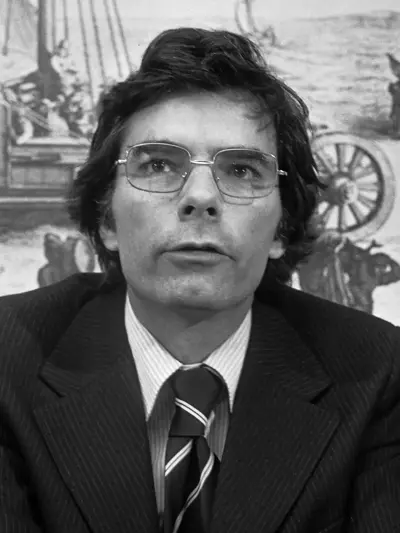
- Born: January 19, 1935
- Died: January 8, 2008
- Nationality: American
- Profession: Central Intelligence Agency
Philip Burnett Franklin Agee was a Central Intelligence Agency (CIA) case officer and writer of the 1975 book, Inside the Company: CIA Diary, detailing his experiences in the CIA. Agee joined the CIA in 1957, and over the following decade had postings in Washington, D.C., Ecuador, Uruguay and Mexico. After resigning from the Agency in 1968, he became a leading opponent of CIA practices. A co-founder of the CounterSpy and CovertAction series of periodicals, he died in Cuba in January 2008.
