Philip Agee Quotes
… the war on terrorism will serve as the justification for restraints on civil liberties.
Agree had resigned from the CIA in protest to its political positions. This prediction was right after the 9-11 attack. He not only predicted the attempts to restrain American civil liberties, but also the length of the war. See {632811}.
Philip Agee, 1935-2008, CIA Field Officer, Speech, Stockholm, September 2001
Sourced by: Eigen's Political and Historical Quotations

Agree had resigned from the CIA in protest to its political positions. He gave this speech shortly after the 9-11 attack. While many disagree with his analysis that the CIA needed a new world-scale enemy, they acknowledge that he accurately warned of and predicted the entanglement of the War on Terror and the long time America would be involved. See {632812} for his prediction about the erosion of American Civil Rights.


In the aftermath of 9-11, there was a call for giving the law enforcement agencies more authority and the Patriot Act was passed in haste and fear. Some law enforcement personnel then went about picking up Arab Americans and in many cases holding them incommunicado without any charges. No terrorists were discovered by this process and yet good American citizens were abused, traumatized and insulted. In our zeal to protect American freedom, we actually began to resemble some of the capricious and abusive practices of our undemocratic enemies. There were other abuses allowed under the Patriot Act, but at the time of this writing the extent had not yet been revealed, but the refusal of the authorities to make public the national security benefits suggests that there was not much national security benefit and much abuse.

Hayden was then ordered to go ahead with several of the ideas for which “no authority existed” including massive secret wiretapping of phone calls that were against the law as it existed. Cheney and the President decided not to ask Congress for a legal change, but took the position that if the President says to do it, it cannot be illegal as he is the Commander in Chief. The lower Federal Courts and the Supreme Court ruled that the doctrine was preposterous and un constitutional.

He was the Chairman of the Senate Judiciary Committee. The intelligence and law enforcement advocates of reducing privacy rights so that law enforcement can prevent acts of terrorism frame the question as a tradeoff between civil right and safety. However, as Leahy and many others point out, we would not be much safer if we gave up all our ivil rights. Further, hundreds of thousands of American have given their lives so that we would have those civil rights. Without them what are we protecting.


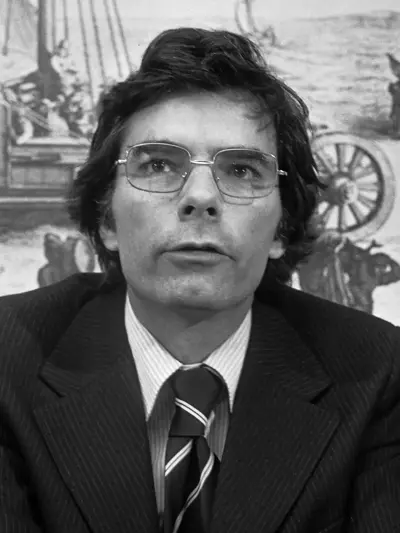
- Born: January 19, 1935
- Died: January 8, 2008
- Nationality: American
- Profession: Central Intelligence Agency
Philip Burnett Franklin Agee was a Central Intelligence Agency (CIA) case officer and writer of the 1975 book, Inside the Company: CIA Diary, detailing his experiences in the CIA. Agee joined the CIA in 1957, and over the following decade had postings in Washington, D.C., Ecuador, Uruguay and Mexico. After resigning from the Agency in 1968, he became a leading opponent of CIA practices. A co-founder of the CounterSpy and CovertAction series of periodicals, he died in Cuba in January 2008.
