Russ Feingold Quotes
There is no doubt that if we lived in a police state, it would be easier to catch terrorists. If we lived in a country that allowed the police to search your home at any time for any reason; if we lived in a country that allowed the government to open your mail, eavesdrop on your phone conversations, or intercept your email communications; if we lived in a country that allowed the government to hold people in jail indefinitely based on what they write or think, or based on mere suspicion that they are up to no good, then the government would no doubt discover and arrest more terrorists. But that probably would not be a country in which we would want to live. And that would not be a country for which we could, in good conscience, ask our young people to fight and die. In short, that would not be America.
Russ Feingold, U. S. Senator (Democrat, WI), Senate Debate on the Patriot Act, 2006
Sourced by: Eigen's Political and Historical Quotations

Agree had resigned from the CIA in protest to its political positions. This prediction was right after the 9-11 attack. He not only predicted the attempts to restrain American civil liberties, but also the length of the war. See {632811}.

In the face of terror bombings, Britain passed some anti-terror laws which also somewhat infringed on civil rights, liberty and privacy.


In the aftermath of 9-11, there was a call for giving the law enforcement agencies more authority and the Patriot Act was passed in haste and fear. Some law enforcement personnel then went about picking up Arab Americans and in many cases holding them incommunicado without any charges. No terrorists were discovered by this process and yet good American citizens were abused, traumatized and insulted. In our zeal to protect American freedom, we actually began to resemble some of the capricious and abusive practices of our undemocratic enemies. There were other abuses allowed under the Patriot Act, but at the time of this writing the extent had not yet been revealed, but the refusal of the authorities to make public the national security benefits suggests that there was not much national security benefit and much abuse.

He was subpoenaed by the House Un-American Activities Committee where he was accused of being a Communist which he eloquently denied starting with this statement. He died of a heart attack 3 days later. However, most historians agree that White passed classified information to the Russians. He was accused of being a Communist, but there was never any evidence of that. Some people believe that he was a spy for the Russians and committed espionage, but others disagree observing that White was very much his own man and felt that much information that was classified never should have been. White substituted his own judgment, it is believed, about what could be given to the Russians for the security system. He was an admirer of what Russian socialism had accomplished economically, educationally and medically since the 1917 revolution deposing the Czar. Russia had been a valuable military ally, which had taken the brunt of both military and civilian casualties in WWII. White’s economics were certainly not Marxist but very much Keynesian.


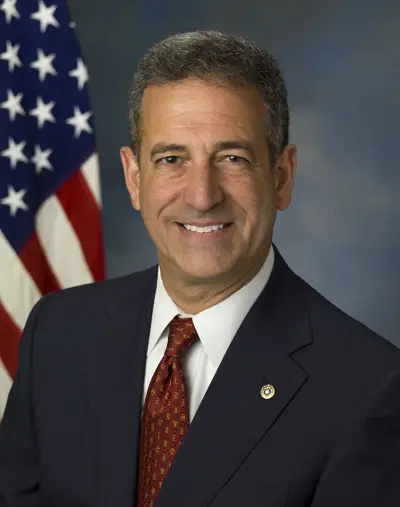
Russell Dana Feingold is an American lawyer and politician who served as a United States Senator from Wisconsin from 1993 to 2011. A member of the Democratic Party, he was its nominee in the 2016 election for the same U.S. Senate seat he had previously occupied. From 1983 to 1993, he was a Wisconsin State Senator representing the 27th District.
