Stephen Kinzer Quotes
In the 1980s, the U.S. Army invaded two Caribbean countries, Grenada and Panama, to depose leaders who had defied Washington.
Kinzer, Stephen. Overthrow: America's Century of Regime Change from Hawaii to Iraq. Times Books, 2006.

Misha Saakashvili, the President of Georgia, the ex-Soviet State, had a good bit of support in American political circles and decided to start a military conflict with Russia attacking a disputed area whose people had rejected Georgia and preferred the Russian affiliation and control. He was confident that the US would protect him from major retaliation. The Russians first moved troops into the attacked area and then started attacking Georgia military assets. Rice and the Russian Foreign minister were negotiating a cease fire on which they agreed to details and were going to impose them on Georgia. However, Lavrov demanded that Georgia President Saakashvili be deposed. Either nation had the power to do this, and both had in many past instances deposed or overthrown the leaders of other nations—democratically elected or not. This quote is very interesting because in this particular case the United States was stating its idealistic policy and not its “real-politic: that it exhibited in helping to bring down and depose democratically elected in Iran, Chile, Vietnam, Venezuela, Haiti, and others. Ironically, there were many in the US who wanted Saakashvili deposed for unilaterally starting a military conflict Russia that had to involve the U. S.


Dulles lied to Congress. The CIA at the time was supplying planes and American pilots in support of an anti-Sukarno Government faction that was in armed revolt. It is not clear whether or not Dulles knew the truth when he had so testified.


John E. Puerifoy, the American ambassador to Guatemala

England in this quotation claims the right to interfere in the internal affairs of another nation if there is mismanagement or crises AND her national interests are affected.

Despite a policy of non-intervention in the affairs of other countries, America has frequently found a reason to make an exception to the policy and send troops to a foreign nation to shape the government in a direction to our liking. After WWII America also used covert operations to change regimes or destabilize governments perceived not in America’s interests. Sending troops to Western Hemisphere nations was continued as well but much less frequently than earlier.

In April of 1962, President Kennedy convened a meeting of top advisors at the State Department to discuss the proposed CIA plan for the invasion of Cuba at the Bay of Pigs. The senator was the lone dissenter from the plan:


The plan was to have an American agent with a few marines make an alliance with a rival to the throne of Algiers and depose the existing ruler with American “special forces”.

The “proofs” were diplomatic assurances—treaties—that England would guarantee the territorial integrity of Belgium. The British made strong diplomatic efforts to persuade Germany not to occupy Belgium. The German’s none the less send armies in under the excuse that if they did not, the French would occupy the country and have a strategic advantage over them. Diplomacy could do no more good. England had to send troops or renege on its obligations. So England was in WWI.


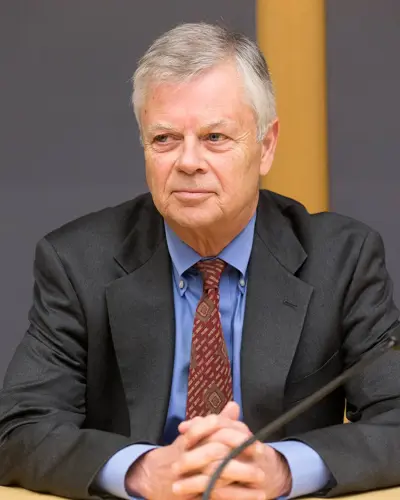
Stephen Kinzer is an American author, journalist and academic. A former New York Times correspondent, he has published several books, and writes for several newspapers and news agencies.
