Charles William Eliot Quotes
The Government of the United States has always maintained that it would not intervene forcibly in the domestic affairs of the Central and South American Republics, and particularly of the island republics in the Caribbean Sea. Nevertheless, both the preceding national Administration and the present have felt no difficulty in using the army and navy of the United States for armed intervention in the affairs of some of those republics; and neither of the two great political parties in the United States has thus far shown any disposition to make an issue with either Administration on this subject.
Despite a policy of non-intervention in the affairs of other countries, America has frequently found a reason to make an exception to the policy and send troops to a foreign nation to shape the government in a direction to our liking. After WWII America also used covert operations to change regimes or destabilize governments perceived not in America’s interests. Sending troops to Western Hemisphere nations was continued as well but much less frequently than earlier.
Charles W. Eliot, 1834-1926, President, Harvard University, “The Next American Contribution to Civilization, Foreign Affairs, September 1922
Sourced by: Eigen's Political and Historical Quotations


Chamberlain’s policy was to appease Hitler and Germany to avoid war. Although he did not see Czechoslavkia as a critical British national interest and claimed he had secured peace {585941} , the reality was that he gave Germany room to start its aggression which would engulf all of Europe and much of the world. The British became the only bulwark against Hitler until the Russians stopped the Germans and America entered the war.


That was an ironic statement. Shortly thereafter we invaded Mexico, occupied the country, pressured it into “selling us much of what is now the Southwest of the United States, and finally left.
See {640521} for the trigger of his anger. This is a good example of a politician using indiscreet hyperbolic terms in anger. In a different time, the President might have been accused of planning extermination and genocide of the Cuban people.


The plan was to have an American agent with a few marines make an alliance with a rival to the throne of Algiers and depose the existing ruler with American “special forces”.


See {633152} for more of the reasoning for this point. “Neocon” is a shortened form of “neoconservative”. At the time the neoconservatives were advocating use of military intervention in the Middle East. Munich was the German city in which British Prime Minister notoriously tried to appease Hitler and the Nazis. This led to WWII and has become the historical icon for appeasement of a powerful tyrant and the cost of such.


This size standing army which alarmed so many at the beginning of the 20th century, looked very small when compared with the standing army of America a century later. For earlier American Politician’s views on a standing army, see {592824}, {631687}, {622888}, and {641008}.
England in this quotation claims the right to interfere in the internal affairs of another nation if there is mismanagement or crises AND her national interests are affected.

sending American troops to Vietnam
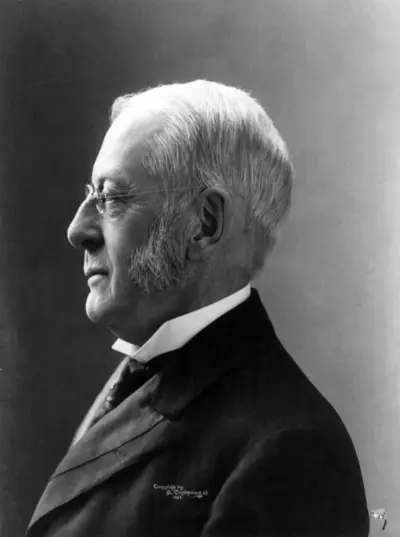
Charles William Eliot was an American academic who was selected as Harvard's president in 1869. A member of the prominent Eliot family of Boston, he transformed the provincial college into the pre-eminent American research university. Eliot served until 1909, having the longest term as president in the university's history.
