Joseph Addison Quotes
In that disputable point of persecuting men for conscience sake, I see such dreadful consequences rising, I would be as fully convinced of the truth of it, as a mathematical demonstration, before I would venture to act upon it or make it a part of my religion.
Addison, Joseph. The Spectator, No. 459, 16 Aug. 1712. Published in The Spectator, Vol. 6, J. Tonson, 1712, p. 358.

This is a very Jeffersonian type statement.


At first this clause appears to be very enlightened and establishing freedom of conscience. This clause allowed Catholics to practice freely whereas in other colonies they could not. However, as one reads on, it becomes clear that the “tolerance” is limited to Christians only. Then if one examines the exception within the parentheses and refer to the rest of the act—see {611994}—, one finds that even Christians who have certain theological beliefs are to be put to death—those for example who deny the holiness of the Trinity such as Unitarians who were a major group in the New England Colonies. It was a significant step at the time however to protect Roman Catholics.

Henry of Navarre


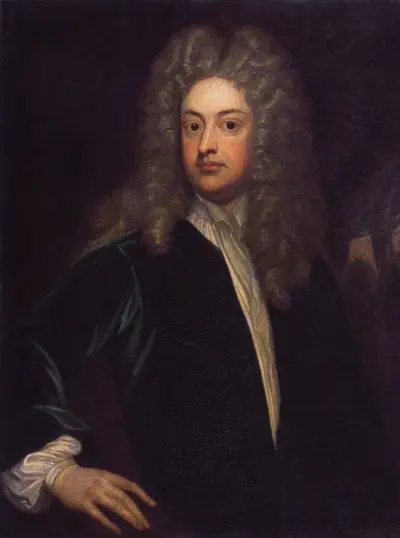
Joseph Addison was an English essayist, poet, playwright and politician. He was the eldest son of The Reverend Lancelot Addison. His name is usually remembered alongside that of his long-standing friend Richard Steele, with whom he founded The Spectator magazine. His simple prose style marked the end of the mannerisms and conventional classical images of the 17th century.
