United States Quotes
… in no case shall nonresident proprietors be taxed higher than residents
This law established a fundamental principle that allowed capital to be invested in new and needy territories without running the risk of the locals discriminating against businesses or establishments owned by strangers. Many states and communities still find ways to favor local businesses but not be discriminatory taxation.
United States, Northwest Ordinance, Article IV, July 13, 1787
Sourced by: Eigen's Political and Historical Quotations


Opposing the ratification of the United States Constitution: Left before it ended.


Comment made in the Congressional Congress debates in 1787. This precedes individual taxation. In the debate, Wilson felt state taxation “should accord with the number of freemen” as “it is strange that annexing the name of ‘State’ to ten thousand men, should give them an equal right with forty thousand.”

Throughout most of the world, the rich and the aristocrats have been able to reduce or eliminate their tax obligations with the burden falling more heavily on the common people. Progressive taxation was thought to be a solution, but even in the United States by the 21st century many huge corporations paid little or no taxes while there was a heavy tax burden on small companies. Rich people generally paid a smaller percentage of their income than middle class people.
whether or not to buy luxuries This quotation and {639885} together illustrate why it is so difficult to classify historical politicians in the left-right categories of a future time. Here Gogel seems a strong liberal arguing for progressive taxation and luxury taxes, and tax relief for the poop, while in {639885} he sounds like a 21st century extreme conservative.


The speech was never actually delivered, but instead the Bishop published it. It received wide distribution including in America where it was published by the Maryland Gazette on September 29, 1774.


Giovanni de Medici

His principle was that if all men shared in paying taxes, no one would have to pay so much as to be impoverished. However, the tradition was to exempt so many citizens and classes of citizens that the burden fell heavily on the remainder. Today, in America, no one is exempted, but there are deductions and tax credits given so that some escape much taxation, the poor pay few taxes, and the burden still falls on some—today, the middle class.


This is one of the first American Presidential statements citing the virtue of progressive taxation. What was an oppressive tax for one person might not be for another.
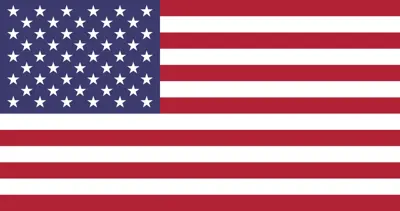
The United States of America (USA), commonly referred to as the United States (U.S.) or America, is a country composed of 50 states, a federal district, five major self-governing territories, and various possessions. The 48 contiguous states and federal district are in central North America between Canada and Mexico, with the state of Alaska in the northwestern part of North America and the state of Hawaii comprising an archipelago in the mid-Pacific. The territories are scattered about the Pacific Ocean and the Caribbean Sea. At 3.8 million square miles (9.8 million km2) and with over 324 million people, the United States is the world's third largest country by total area (and fourth largest by land area) and the third most populous. It is one of the world's most ethnically diverse and multicultural nations, the product of large-scale immigration from many other countries.
