Garrett Hardin Quotes
In an approximate way, the logic of commons has been understood for a long time, perhaps since the discovery of agriculture or the invention of private property in real estate.
Hardin, Garrett. "The Tragedy of the Commons." Science, vol. 162, no. 3859, 1968, p. 1244.


Use included renting it. What he opposed was simply holding land when whites were driving Indians off their lands because all the unused land outside of the reservation was owned by someone and the asking price was very high. Ingersoll was considered to be the greatest orator and political thinker of his day, but his overt atheistic views curtailed his elected political career.


Sealed under duress and later repudiated by the King with Papal assistance. This clause was particularly interesting in that almost all freedoms have expanded from the Magna Carta in modern democracies. However in this one there was an absolute direct prohibition against the King—the State—taking private property without the owners consent. In modern democracies the right is not as strong as the original. The state, if it needs the property, wood or whatever, and the owner refuses to give it or sell it to the state, the government can condemn the property but must pay the owner the fair market value of the property seized. As a practical matter, the kings of England paid little or no heed to this clause. One of the sources of conflict between the English Royal Navy and the American Colonists was the practice of Naval agents finding tall straight trees, good for the main mast of a ship, and marking it thereby prohibiting the property owner of cutting down that tree until the Crown sent a crew to fell the tree and take it for ship building. They paid no attention to Aticle 31 whatsoever.


This philosophical point of view is at odds with that of many Native Americans.

This quotation illustrates a very interesting historical fact about white understanding of Native American concepts of property and ownership. Here is a Scottsman before the American Revolution who is writing about American Indians and their communal concept of property. The “purchases” of Indian land from individual Indians therefore has even more doubt cast on the propriety than if the whites were acting in good faith. Furguson had personally visited North America for a brief visit.


The Rio Grande River flows through New Mexico on its way to Texas. However, for many reasons the river flow is diminishing and only a little water makes it to Texas. Some Texas politicians wanted the New Mexican farmers, who were miles from the river and have paid to drill wells which they use to pump water for their irrigation, to limit their water pumping. They argued that the pumping was diminishing the water in the underground aquifer, and this was causing some of the water flowing down the river to flow into the New Mexico aquifer thereby diminishing the river flow. The New Mexican farmers argue that they paid a great deal for that land because it came with water rights under the ground and the water is theirs. This was one of the many intractable problems of agricultural water allocation in the West where farmers plant many crops that would not normally survive in that part of the country without artificial irrigation.


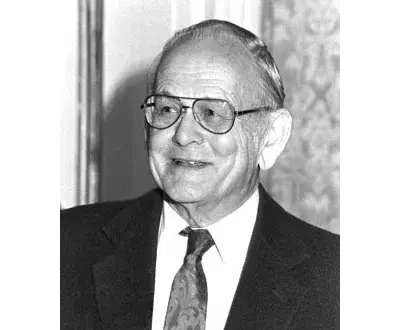
Garrett James Hardin was an American ecologist who warned of the dangers of human overpopulation. He is most known for his exposition of the tragedy of the commons, in a 1968 paper of the same title in Science, which called attention to "the damage that innocent actions by individuals can inflict on the environment". He is also known for Hardin's First Law of Human Ecology: "We can never do merely one thing. Any intrusion into nature has numerous effects, many of which are unpredictable.":112 He is listed by the Southern Poverty Law Center as a white nationalist, whose publications were "frank in their racism and quasi-fascist ethnonationalism".
