Garrett Hardin Quotes
Indeed, our particular concept of private property, which deters us from exhausting the positive resources of the earth, favors pollution.
Hardin, Garrett. "The Tragedy of the Commons." Science, vol. 162, no. 3859, 1968, p. 1245.


The major reason for not yet harvesting waste is the labor, caital, and energy costs of recycling relative to the value of the resource is too high. Technology improvements and greater shortages continuously change the equation in favor of harvesting more and more resources.

His studies showed that at the end of the 10th Century, London was booming. At that time the diet changed rapidly from fresh water fish to salt water fish. The economic boom and growth placed heavy demand on the fresh water fish stock which had become depleted. Londoners then turned to the ocean for their fish. Now the oceans are becoming depleted of fish stocks, and the next step is likely to be large scale fish farming.


This statement of the problem was so eloquent and universal that it is even used a century later. For example it was quoted by James Inhofe, on his Senate Speech, October 4, 2004.


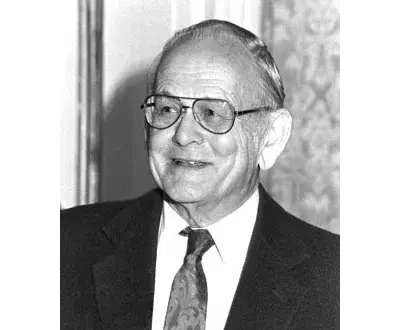
Garrett James Hardin was an American ecologist who warned of the dangers of human overpopulation. He is most known for his exposition of the tragedy of the commons, in a 1968 paper of the same title in Science, which called attention to "the damage that innocent actions by individuals can inflict on the environment". He is also known for Hardin's First Law of Human Ecology: "We can never do merely one thing. Any intrusion into nature has numerous effects, many of which are unpredictable.":112 He is listed by the Southern Poverty Law Center as a white nationalist, whose publications were "frank in their racism and quasi-fascist ethnonationalism".
