Zachary Taylor Quotes
I’ll hang them.
Secession was not a new concept just before the Civil War. Southerners had threatened in early America, not to join the Union unless they could maintain the evil of slavery. After the union and the Constitutional ratification, whenever there was any discussion of slavery attempted in the Congress, some Southerners would threaten secession.
Zachary Taylor, 1784-1850, 12th President of the United States (Whig, KY), Reference to Southerners who were threatening secession, Quoted on The History Channel, The Presidents, December 23, 2008
Sourced by: Eigen's Political and Historical Quotations

Peter was the first Russian Ruler to ever leave Russia. While he was gone, there was a rebellion of the Streltsi—the Muscovite Guard. Peter was the most urbane and sophisticated of the Russian rulers, but he was also capable of a traditional response of force. True to his word, he hung over 500 Streltsi from the Kremlin walls.

A number of the American soldiers refused to obey Calley's illegal order. Some helped some villagers to escape, and a helicopter pilot landed betreen Callery's men and the villagers they were shooting at, and ordered his helicopter machine gun crew to fire on the soldiers if they did back off. The soldiers stopped firing at the civillians. However, his and other reports of the massacre were covered up by the military for a few years. Mai Lai was not the only major war crime perpetrated by Americans in the Vietnam War; there had been a few others. But given the years of fighting and the many opportunities war crimes violations under orders were quite rare. The Viet Cong had many more war crimes that they perpetrated, and our South Vietnamese allies repeatedly committed war crimes against their own people.


Campbell carried out the order although many MacDonalds escaped in the highlands. The particular massacre has always taken on an even greater infamy because the Campbell murderers had been given food and hospitality by the MacDonalds. This began the most bitter of the Scottish clan feuds that persists into modern times.


The woman was kidnapped from her home and shot.


South Carolina passed a state law which overrode and nullified Federal Laws that they did not like. It was a type of secession. President Jackson, in his own blunt style, let them know that they had better not try to implement their nullification law. Of all the Presidents in American History, Jackson had the least respect for Constitutionality and due process. He had a history of summary execution where he was the judge, jury and almost the personal executioner. He is the only president in American history who refused to obey and order of the Supreme Court. There were few who doubted that he would make good on his threat. The South Carolina convention reconvened and repealed its Nullification Ordinance on March 11, 1833.

government appointed officials and bureaucrats Savonarola was a very hated ruler, opposed to any kind of a Parliament or assembly. And the penalty for advocating for a Parliament was severe. The Signoria were the various government appointees and clerks. They were influential in Florence and hence they were silenced by the mot draconian methods. There was a movement throughout Italy for parliaments and less arbitrary government. Savonarola was particularly strict in his rooting out sin and cruel in his punishments and hence very unpopular. He was also under the delusion that God himself had called on him to preach his strict version of morality. Some of the Nobles reached the Pope with many of Savonarola’s extreme statements and Savonarola was excommunicated and burned as a heretic. His executioner gloated that he was burning Savonarola before the powerful priest could burn him as he had done so many others.


The king was found guilty and was decapitated, but not wearing a crown.


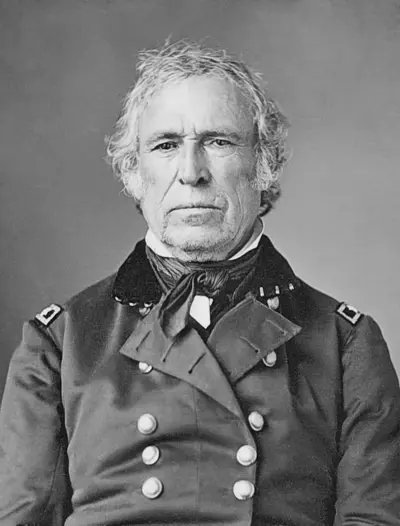
Zachary Taylor was an American military leader who served as the 12th president of the United States from 1849 until his death in 1850. Taylor previously was a career officer in the United States Army, rose to the rank of major general and became a national hero as a result of his victories in the Mexican–American War. As a result, he won election to the White House despite his vague political beliefs. His top priority as president was preserving the Union. He died sixteen months into his term, having made no progress on the most divisive issue in Congress, slavery.
