John Crosby Quotes
If women vote for Liberace as a piano player--and I'm sure they do--it raises questions about their competence to vote for anything.
John Crosby, 1912–1991, Newspaper columnist, radio-television critic, novelist and TV host, Column, New York Herald Tribune
Sourced by: Eigen's Political and Historical Quotations


Although Campaigning in the heart of the conservative Midwest, she had no compunction about advocating women’s suffrage.

Hunt gave as an example Mary Smith of Stanmore. This quotation is very interesting in the history of women’s suffrage. Hunt was a strong advocate for Universal Suffrage (See {616653}.) At the time, even men had to be a taxpayer and own a sufficient amount of property to vote. Less than 20% of the population of Britain were allowed to vote. The argument at the time was that the husband would represent the family’s interest at the ballot box and there was no need for women to vote. But by facing parliament with the logical inconsistency of its position, he was able to make his point, although there were very few women like Mary Smith who were single and had the economic resources to qualify. Most widows remarried so even if they had economic resources, there was a man who could assume the then perceived role of head of the household.

Howe said women should be officially deprived of the ballot because of this reason.

Samuel Langhorne Clemens, 1835-1910


The Organization's Periodical. The statement was repeated several times in variation between 1890 and 1920. This organization was the national leader of similar organizations in over 20 States. Many notables were involved including Louis D. Brandeis, Francis Parkman and John Lowell.

For reasons few understand, she was, even as late as 2011, the only regular female political cartoonist employed regularly by a newspaper or syndicate.


Actually, shortly thereafter some women in Egypt were allowed to be judges, but were not allowed to handle serious criminal cases on the grounds that women could not be hard enough to impose heavy punishment like the death penalty.


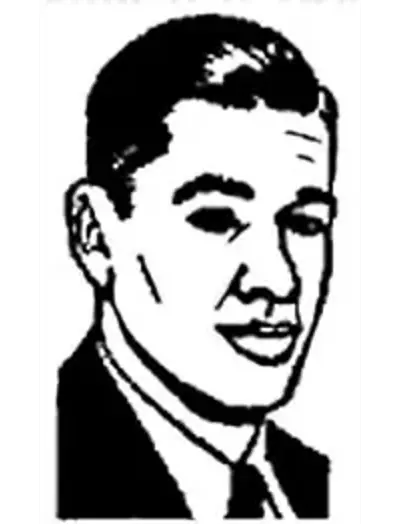
John Crosby was an American newspaper columnist, radio-television critic, novelist and TV host. After winning a Personal Peabody Award for his radio criticism in 1946, he became a member of the Peabody Awards Board of Jurors, serving from 1947 to 1962. During the 1950s, he was generally regarded as the leading critic of television.
