Carrie Chapman Catt Quotes
There are whole precincts of voters in this country whose united intelligence does not equal that of one representative American woman.
Catt, Carrie Chapman. "Danger to Our Government." National American Woman Suffrage Association Convention, 15 Feb. 1894, Washington, D.C. Address.


For reasons few understand, she was, even as late as 2011, the only regular female political cartoonist employed regularly by a newspaper or syndicate.


Although she was living proof of a woman’s ability to accomplish what most men could not, she was always publicly differential to men and their sexism. Although she opposed women voting in Parliamentary elections, she did believe that women should vote in local elections where the understood the issues much better.


Although liberal on many other issues, women voting was anathema to him.


The editorial was in support of women’s suffrage—the right to vote which at the time women did not have in Britain. Women were very active in protests and demonstrations. Tactics sometimes involved civil disobedience and chaining themselves to public buildings. It was the civil disobedience and disruptions that the newspaper referred to as the “follies and excesses.” In retrospect today, it is amazing how threatened the society felt and how they reacted to the “threat” of females voting. It does however give us a perspective on those contemporary societies which restrict women’s voting rights.


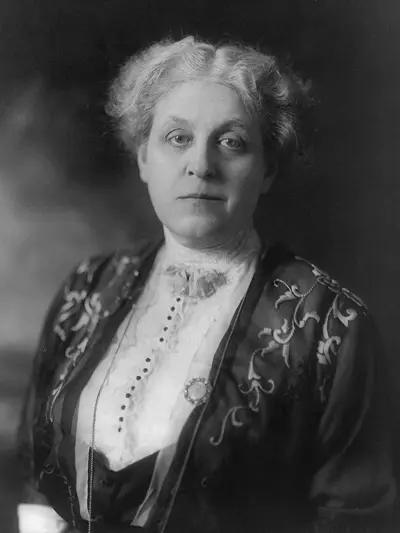
Carrie Chapman Catt was an American women's suffrage leader who campaigned for the Nineteenth Amendment to the United States Constitution, which gave U.S. women the right to vote in 1920. Catt served as president of the National American Woman Suffrage Association from 1900 to 1904 and 1915 to 1920. She founded the League of Women Voters in 1920 and the International Woman Suffrage Alliance in 1904, which was later named International Alliance of Women. She "led an army of voteless women in 1919 to pressure Congress to pass the constitutional amendment giving them the right to vote and convinced state legislatures to ratify it in 1920" and "was one of the best-known women in the United States in the first half of the twentieth century and was on all lists of famous American women."
