John Lanchester Quotes
If we are going to remake society in the image of the fight against terrorism and put that secret fight at the heart of our democratic order - which is the way we're heading - we need to discuss it, and in public.
Lanchester, John. "Let's Consider Snowden." London Review of Books, vol. 35, no. 19, 10 Oct. 2013.


Edward Snowden, a defense contractor and government employee, publicly revealed that the U. S. intelligence agencies were intercepting and keeping a data base of ALL telephone calls and all Internet e-mails. The government had denied that this was so, and had classified the domestic spying program as Top Secret. Snowden had signed an agreement not to reveal any classified information, and he violated the agreement. Therefore the government was trying to extradite Snowden from Russia at the time so that they could criminally prosecute him. However, there was great debate as to whether the spying on all Americans was legal and Constitutional. Many saw Snowden as a “whistleblower” and pointed out that the government which had lied wanted to prosecute Snowden for telling the truth. Fein, an attorney, was representing Snowden and his family.


Agree resigned from the CIA in protest to its political position.


Goldsmith headed the Justice Department Office of Legal Counsel—the office that makes legal opinions to guide the Federal Government’s conduct. The George W. Bush White House had decided that the War on Terror required spying on American citizens under certain circumstances but the existing laws required that in each case, they obtain a warrant from a special FISA (Foreign Intelligence Surveillance Act) Court. They were afraid that the court might not grant the warrants in all cases so in some cases ignored the requirements to go through the court. Addington and some other White House staff felt that if there was one more terrorist incident in the United States, they could pressure Congress into getting rid of the FISA court.

Agree had resigned from the CIA in protest to its political positions. This prediction was right after the 9-11 attack. He not only predicted the attempts to restrain American civil liberties, but also the length of the war. See {632811}.

He was the Chairman of the Senate Judiciary Committee. The intelligence and law enforcement advocates of reducing privacy rights so that law enforcement can prevent acts of terrorism frame the question as a tradeoff between civil right and safety. However, as Leahy and many others point out, we would not be much safer if we gave up all our ivil rights. Further, hundreds of thousands of American have given their lives so that we would have those civil rights. Without them what are we protecting.
He was the Chairman of the Senate Judiciary Committee. The Islamic fundamentalist terrorists are repugnant to us because they have no respect for Civil and Human Rights and would deny us what we value so highly and for which so many Americans have sacrificed. We are little better off if we surrender our civil rights in order to cope with the problem of losing our civil rights to the likes of the Taliban and Al Qaeda.


In the face of terror bombings, Britain passed some anti-terror laws which also somewhat infringed on civil rights, liberty and privacy.
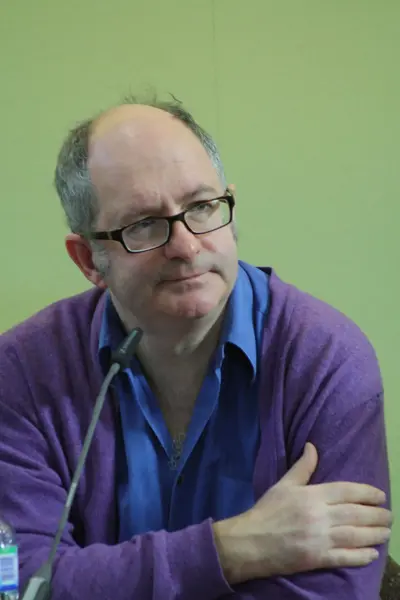
John Henry Lanchester is a British journalist and novelist. He was born in Hamburg, brought up in Hong Kong and educated in England; between 1972 and 1980 at Gresham's School in Holt, Norfolk, then at St John's College, Oxford. He is married to historian and author Miranda Carter, with whom he has two children, and lives in London.
