Neil Young Quotes
This thing called Patriot Act, through which we abdicated a lot of our civil rights to defend the country against terrorism, it's a four-year story.
Young, Neil. Neil Young on Neil Young: Interviews and Encounters. Edited by Arthur Lizie, Chicago Review Press, 2012.


Goldsmith headed the Justice Department Office of Legal Counsel—the office that makes legal opinions to guide the Federal Government’s conduct. The George W. Bush White House had decided that the War on Terror required spying on American citizens under certain circumstances but the existing laws required that in each case, they obtain a warrant from a special FISA (Foreign Intelligence Surveillance Act) Court. They were afraid that the court might not grant the warrants in all cases so in some cases ignored the requirements to go through the court. Addington and some other White House staff felt that if there was one more terrorist incident in the United States, they could pressure Congress into getting rid of the FISA court.

In the aftermath of 9-11, there was a call for giving the law enforcement agencies more authority and the Patriot Act was passed in haste and fear. Some law enforcement personnel then went about picking up Arab Americans and in many cases holding them incommunicado without any charges. No terrorists were discovered by this process and yet good American citizens were abused, traumatized and insulted. In our zeal to protect American freedom, we actually began to resemble some of the capricious and abusive practices of our undemocratic enemies. There were other abuses allowed under the Patriot Act, but at the time of this writing the extent had not yet been revealed, but the refusal of the authorities to make public the national security benefits suggests that there was not much national security benefit and much abuse.

He was the Chairman of the Senate Judiciary Committee. The intelligence and law enforcement advocates of reducing privacy rights so that law enforcement can prevent acts of terrorism frame the question as a tradeoff between civil right and safety. However, as Leahy and many others point out, we would not be much safer if we gave up all our ivil rights. Further, hundreds of thousands of American have given their lives so that we would have those civil rights. Without them what are we protecting.


There has in the United States, since the Constitution was ratified, a tension in every war or conflict, where some Americans wanted to reduce civil rights in order to better cope with the conflict and others observed that what we were fighting for is precisely those civil rights and liberties. John Adams and the Federalists, did not want anyone to be allowed to publicly criticize the Government while we were in conflict with Great Britain. They passed the Alien and Sedition Acts. Thomas Jefferson and the Republicans felt that that the freedom should not be given up in the name of national security—we could prevail without that incursion on rights. They repealed the Adams laws. In WWI, Democratic President Woodrow Wilson wanted to jail anyone who claimed that the military draft was improper, immoral or illegal, and he did. Republicans, when they assumed office, then released the prisoners and restored freedom of speech. In the war on terror, most Republicans like sessions, wanted to torture prisoners, allow the imprisonment of suspected terrorists indefinitely without any charges or trial, and bug American telephone calls without the usually required court warrants. Democrats disagreed. That stimulated Sessions statement.

Agree had resigned from the CIA in protest to its political positions. This prediction was right after the 9-11 attack. He not only predicted the attempts to restrain American civil liberties, but also the length of the war. See {632811}.
He was the Chairman of the Senate Judiciary Committee.
He was the Chairman of the Senate Judiciary Committee. The Islamic fundamentalist terrorists are repugnant to us because they have no respect for Civil and Human Rights and would deny us what we value so highly and for which so many Americans have sacrificed. We are little better off if we surrender our civil rights in order to cope with the problem of losing our civil rights to the likes of the Taliban and Al Qaeda.

In the face of terror bombings, Britain passed some anti-terror laws which also somewhat infringed on civil rights, liberty and privacy.
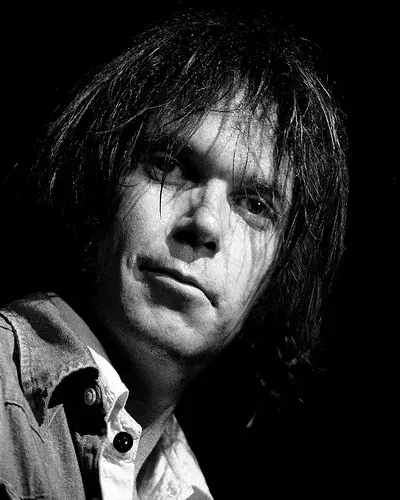
Neil Percival Young OC OM is a Canadian-American singer-songwriter, musician, and activist. After embarking on a music career in the 1960s, he moved to Los Angeles, joining Buffalo Springfield with Stephen Stills, Richie Furay and others. Since the beginning of his solo career with his backing band Crazy Horse, Young has released many critically acclaimed and important albums, such as After the Gold Rush, Everybody Knows This Is Nowhere, and Harvest.
