Alan Dershowitz Quotes
If torture is going to be administered as a last resort in the ticking-bomb case, to save enormous numbers of lives, it ought to be done openly, with accountability, with approval by the president of the United States or by a Supreme Court justice.
Dershowitz, Alan. Why Terrorism Works: Understanding the Threat, Responding to the Challenge. Yale University Press, 2002, p. 158.


The Senate was debating a law to make torture of foreigners and captives illegal under all circumstances. Vice President Cheney was very strongly opposed wanting an exception made for the CIA.

Clinton did believe that there might be a rare situation where extra judicial methods might be resorted to but he felt that those involved should be ready to take the responsibility and the consequence. He had suggested formalizing the theoretical exception, but then changed his mind as the exception would be abused.


He was arguing that even if torture might provide useful intelligence not otherwise obtainable, it is not necessary in order for us to succeed in our objectives. Ironically, the military interrogation rules prohibited torture in conformity with US law and treaties but the CIA ignored those restrictions and secretly tortured a number of victims in the War on Terror until their actions became public and they too were required, by executive order to follow the military interrogation guidelines.


The problem that was facing the nation in the early 21st century was when we captured a terrorist, was he a combatant or was he accused by a personal enemy, and had he been tortured to say he was a terrorist. The issue grew more complicated when terrorist suspects were brought to American territory at Guantanamo Bay, and the Courts have always held that a foreigner on American soil had a right to have access to the Federal Courts just as Citizens do. Complicating the situation more was the fact that a few American citizens had joined the terrorists and were they entitled to a civilian trial as all other Americans were.


Major Fleener had been assigned to defend accused terrorists who were being held at the military prison in Guantanamo, Cuba. For several years they were held without a hearing or trial. Then the U. S. Supreme Court ruled that they had to be given a hearing or trial. A Military tribunal was selected. The methods and procedures of these hearings came under much public world-wide criticism as they did not meet the normal legal standards of most countries. Surprisingly, one of the military officers made public statements criticizing the army and the trials.


Chelsea Elizabeth Manning

This was untrue. The CIA used several forms of torture on high value detainees. The torture was psychological and physical. Even the FBI had agents who observed CIA interrogations and complained to their supervisors. For cover, the George W. Bush administration, got 3 Justice Department Attorneys to write a secret memo defining certain types of torture as “enhanced interrogation”. Water Boarding, for which American soldiers had been court martialed and convicted for torture then became enhanced interrogation, and was used on a few terrorists. Because of the rigged Justice Department memo, the CIA claimed that they did not torture people. Another thing the CIA did was to turn over enemy to the intelligence services of third countries like Egypt, where torture was used commonly with no regard for the Geneva convention or other human rights provision. CIA agents then watched and asked questions but they claimed that they did not torture which was in some sense literally true.
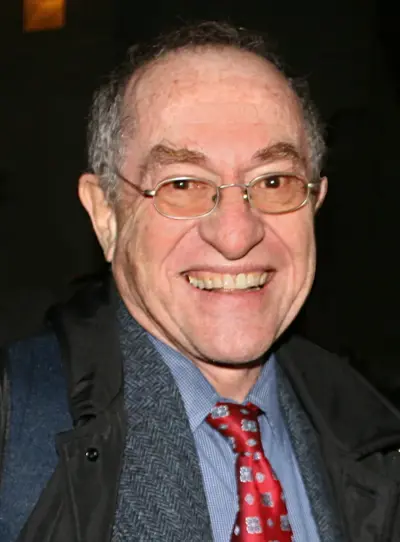
Alan Morton Dershowitz is an American lawyer known for his work in U.S. constitutional law and American criminal law, and for controversial political views.
