Plato Quotes
If there were only some way of contriving that a state or an army should be made up of lovers and their beloved, they would be the very best governors of their own city, abstaining from all dishonour, and emulating one another in honour; and when fighting at each other's side, although a mere handful, they would overcome the world. For what lover would not choose rather to be seen by all mankind than by his beloved, either when abandoning his post or throwing away his arms? He would be ready to die a thousand deaths rather than endure this.
Plato. Symposium. The Dialogues of Plato, vol. 1, translated by Benjamin Jowett, Macmillan, 1892, p. 547.


Attila the Hun. The Romans aided by Theodoric, King of the Visigoths, fought the Huns in the only battle that Attila ever lost which he lost badly. There were 165,000 men killed in an afternoon. The Roman General, Flavius Aetius, had been a boyhood friend of Attila’s and had fought with him against the Visigoths. The Romans had Attila trapped but his old friend let him escape with just a good thrashing to his ego and army as to not upset the balance of power and tilt it in favor of the Goths. Roman foreign policy at the time was to keep all the Barbarians strong enough to fight one another so that none would be dominant but all weaker than Rome. Divide and conquer.


Quintus Horatius Flaccus. This famous quotation has been echoed in virtually every language and every country of the world. However, see Ernest Hemingway for a counter view.


He had been mortally wounded in battle and asked the Duc de Bourbon to prop him up against a tree facing the enemy. Then enemy army was French also but abandoned the cause of the French King to fight with the more powerful Holy Roman Emperor, Charles V. He was only going to die, but the enemy would remain traitors for ever. This was typical of the code of the Knights of which he is sometimes referred to as the Last of the Knights.


An example of this was the landing in the beaches of Normandy in WWII. Once on the beaches the allied troops had to win or die. Some of the most heroic fighting in American and English military history occurred on those beaches. Another was the Spanish Explorer Hernando Cortez who after landing in the New World, had his ships burned so that he and his soldiers had to conquer or they would die.

Ataturk was a young major at the time commanding troops of a weak and corrupt Ottoman regime. However a combined English and French (the strongest military powers in Europe) invasion of the Gallipoli Peninsula threatened to capture the Turkish capital, Constantinople. Ataturk alone rallied the Turkish defenders and fought the invaders to a standoff in long drawn out battle with huge casualties on both sides. Ataturk became a national hero. Although Ataturk thereafter was very reluctant to use military force or endanger troops, the thing he always thought worth the supreme sacrifice (including his own) was the independence and sovereignty of the nation. See {584502} for his continuing belief in this type of sacrifice.


A Federal Naval flotilla was preparing to attack South Carolina Forts Beauregard and Walker in the area of Hilton Head and Port Royal. The navy took both forts the next day with their naval bombardment so powerful that the Confederate Rebels had to abandon both forts gaining a kind of revenge for the Confederate capture of Fort Sumter at the war’s beginning.
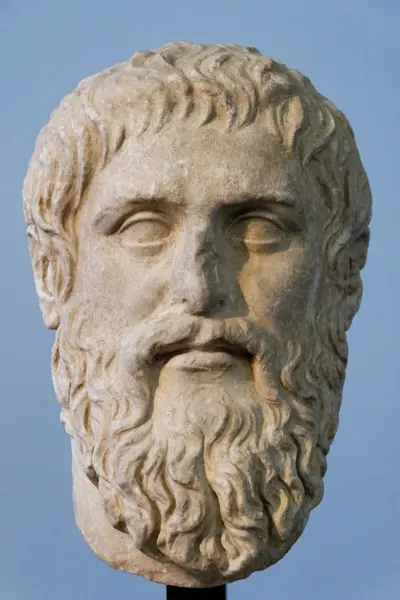
Plato (/ˈpleɪtoʊ/ PLAY-toe; Greek: Πλάτων Plátōn, pronounced [plá.tɔːn] in Classical Attic; 428/427 or 424/423 – 348/347 BC) was an Athenian philosopher during the Classical period in Ancient Greece, founder of the Platonist school of thought and the Academy, the first institution of higher learning in the Western world.
