Herbert Marcuse Quotes
If the worker and his boss enjoy the same television program and visit the same resort places, if the typist is as attractively made up as the daughter of her employer, if the Negro owns a Cadillac, if they all read the same newspaper, then this assimilation indicates not the disappearance of classes, but the extent to which the needs and satisfactions that serve the preservation of the Establishment are shared by the underlying population.
Marcuse, Herbert. One-Dimensional Man: Studies in the Ideology of Advanced Industrial Society. Beacon Press, 1964, p. 8.


This quotation explains why so many of the Southern poor so actively supported the racist Slavery system even though they could not afford slaves and received no direct benefit from slavery or the discrimination against free Blacks. The poor were not at the bottom of the totem pole, and therefore had a dignity and social status, that the poor in a racially integrated society never possessed.

Most pressure for political correctness comes from the center or the left. On this area however, pressure to avoid speaking of this comes from left and right. The left is concerned that by discussing the reality the poorer performing subgroups will be stigmatized and public behavior will make the situation worse. The right would prefer that there is little or no political dialogue regarding the huge differences in outcome in America where individual ability and effort seems to play such a large part of the differential. I addition, they see the making of these distinctions as the beginning of class warfare.


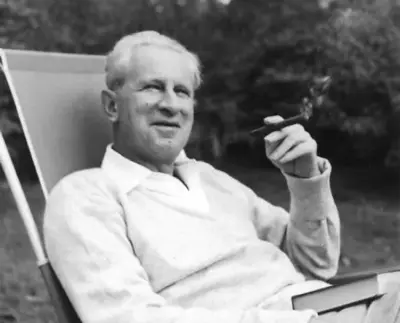
Herbert Marcuse was a German-American philosopher, sociologist, and political theorist, associated with the Frankfurt School of critical theory. Born in Berlin, Marcuse studied at the Humboldt University of Berlin and then at Freiburg, where he received his PhD. He was a prominent figure in the Frankfurt-based Institute for Social Research – what later became known as the Frankfurt School. He was married to Sophie Wertheim (1924–1951), Inge Neumann (1955–1973), and Erica Sherover (1976–1979). In his written works, he criticized capitalism, modern technology, Soviet Communism and entertainment culture, arguing that they represent new forms of social control.
