Dennis Chavez Quotes
If the Constitution is worth anything, if the Declaration of Independence is worth anything, if the boys who died on the field of battle did not die in vain, fair employment practices are correct and necessary.
United States, Congress, Senate. Congressional Record. 79th Cong., 2nd sess., vol. 92, Government Printing Office, 1946.


_0_thumbnail_47x47.jpg)


This was a very courageous speech for the President to give. Senator Hubert Humphrey had proposed civil rights legislation. At the time most of the racial conservative members of Congress were Democrats and not Republicans as they would become after Civil Rights legislation actually passed in 1964. There was little possibility that the civil rights law would pass as the Southern Democrats could filibuster it in the Senate. None the less Truman supported the legislation and the principle of equal rights despite the fact that he was a Southerner and he knew he would lose the support of the conservative wing of his party.

Wallace had castigated civil right protesters coming to Alabama as “outsiders.”


At the time, the Southern segregationists were all Democrats and they blocked any Democratic attempt to pass any Civil Rights legislation. When he could not get a Civil Rights commitment from his own party, Powell turned to the Republicans and the President wrote this letter. In return, in November, Powell endorsed and supported Eisenhower instead of Stevenson, his own party’s nominee. Eisenhower could not get any legislation on Civil Rights as the Southern Democrats would always block it. When President Lyndon Johnson finally forced the 1963 Civil Rights Act through the Congress, the racist Southern Democrats cut a deal with Goldwater and the conservative Republicans, and switched parties. Since then the Civil Rights stance of the two parties reversed. The Democrats were thereafter pro Civil Rights and the Republicans, the party of Lincoln and Reconstruction, thereafter reversed their Civil Rights position and opposed progress in this area.


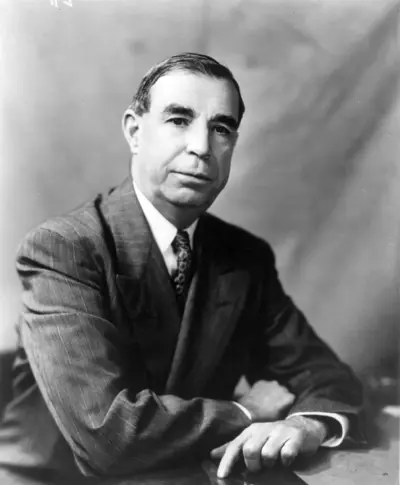
Dionisio "Dennis" Chávez was an American politician who served in the United States House of Representatives from 1931 to 1935, and in the United States Senate from 1935 to 1962. He was the first Hispanic person elected to a full term in the US Senate and the first U.S. Senator to be born in New Mexico (which was still a U.S. Territory at the time of his birth).
