William Henry Harrison Quotes
If parties in a republic are necessary to secure a degree of vigilance sufficient to keep the public functionaries within the bounds of law and duty, at that point their usefulness ends. Beyond that they become destructive of public virtue, the parent of a spirit antagonist to that of liberty, and eventually its inevitable conqueror.
William Henry Harrison, 1773-1841, 9th President of the United States (Whig, OH), Inaugural Address, March 4, 1841
Sourced by: Eigen's Political and Historical Quotations


In 2015, a group of hyper-partisan Republicans initiated yet another investigation of the attack on an American Consulate in Libya where the U. S Ambassador was killed. The incident had occurred when Hilary Clinton had been Secretary of State some time earlier. However, she was then the leading Democratic Candidate for President, and some Republicans wanted to question her under oath in the hopes that they could find something to embarrass her and derail her surging campaign. Hanna and a few other Republicans admitted the truth as they were opposed to the abuse of the Congressional power to investigate for partisan purposes. However, the reaction against Hanna by some members of his own party was extremely harsh. The theory of the Hanna critics was that telling the truth was in this case highly embarrassing to the Party and damaged the credibility of many accusations made against Mrs. Clinton who turned the tables on the investigators in when they questioned her for over 11 hours straight, and despite the total absurdity of the hearing and the questions—all of which had been asked before, she comported herself with Presidential dignity and pretended to take the hearings very seriously and answered the same loaded questions repeatedly. See {582957} for his earlier statements.


Jefferson and many others thought the original drafting of the Constitution was deficient in not explicitly protecting rights from the government. See {586024}. When it came time for ratification, it was clear that ratification would not take place unless that was remedied and the Bill of Rights made the ratification possible by satisfying many critics of whom Jefferson was but one. Note that the protection sought was from the President and the Congress.


Note that early constitutional experts assumed that one of the President’s roles was to be non partisan and control partisanship. Note the phrase ‘prevent the artifices of party’. The early founders were very wary of political parties of ‘factions’ as Madison called them. However, most were extremely partisan although in the Presidency partisanship was toned down by George Washington but after him, partisan ship became the norm.

The Republicans had broken off from the Whig Party and started a new one.

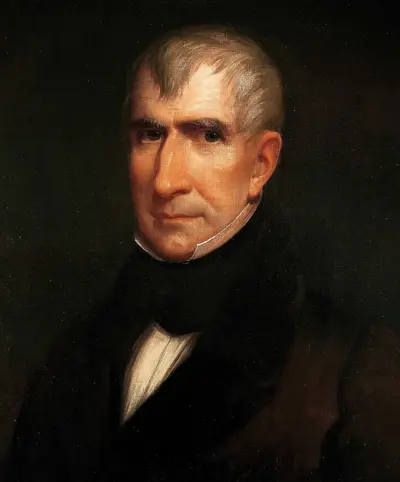
William Henry Harrison was an American military officer and politician who served as the ninth president of the United States for 31 days in 1841, becoming the first president to die in office and the shortest-serving U.S. president in history. His death sparked a brief constitutional crisis regarding succession to the presidency.
