Zachariah Chandler Quotes
If it was only Abe Lincoln, I would say go to Hell in your own way. [But the alternative is] Traitor McLelland
Zachariah Chandler, 1813-1879, U. S. Senator (Republican, MI), Chairman, Republican National Executive Committee, Letter to his wife, 1864
Sourced by: Eigen's Political and Historical Quotations

While Douglas and Lincoln were political opponents with little love lost between them, both were patriots. Douglas’s position were much more popular in the South, and the moment he realized that Lincoln would win the Presidency, he headed South where he was very persuasive in trying to hold the Union together, but he could not see all the potential rebels and was only effective with some. South Carolina not only seceded, but in order to prevent any changing of minds, some the worst of the South Carolinians, attacked Fort Sumter firing on the American Flag and attacking and capturing the Union troops who were totally outnumbered. The Civil War was then inevitable.

The Talmud is a Jewish legal and ethical collection; Henry Ford was a well known anti-Semite of the time.


Oates was a Confederate Colonel during the Civil War. His statement almost started a brawl as the Memorial Dedication was a joint North-South participation event. Northern politicians, officers and men were outraged and rose to their feet with several mounting the rostrum to refute Oates intemperate remarks. However, like Southern politicians of the 1960s, they produced a lot of redneck support with such extreme statements. The main reason this quotation is important is that most politicians of North and South wanted to get the animosity of the Civil War over with and to do so sponsored these memorial events where both sides could celebrate and remember the bravery of men fighting and dying for their cause. The photographs of former enemies shaking hands which the newspapers ran frequently, would give the impression that by the 1880s the hatred and animosity of the Civil War was behind the nation. However, that was not at all true. Most veterans of both sides maintained their hatreds throughout their entire lives. Even their children carried the hatred into the next generation. Politicians were expected to not open the scabs of the old wounds in public, but many like Oates found political utility in not doing so. The moral outrage of many in the North remained until WWII when regional unity genuinely transcended the Civil War. See {639364} for a Northern example with no political motive but with uncontrollable moral outrage.


Lincoln was a deist but he was never a favorite of the official clergy of any of the religions. When he ran for President in 1860, 20 of the 23 clergymen of his home town, Springfield, IL, opposed him. As he assumed office he was much more prudent in his religious remarks and in the view of some historians political realities and pragmatics caused him to be more circumspect. His oldest friend and law partner believed him to be an unbeliever. See {586285}.


Eccles had been a wealthy Republican banker before masterminding much of the New Deal economic policies. He was pilloried by many of his fellow wealthy businessmen and financiers.
It is the quotee’s thesis that these leaders and many others adopted deliberate affectation to their dress for the dual political purpose of easy public recognition and fitting an image of individuality but short of deviance.

The American Civil War was followed by intellectuals throughout the world. Most were offended by the immorality of the slavery that the South was fighting to maintain, but admired the way they organized and fought for their principles.

On his deathbed he claimed to Kelly that he had been offered command of the Army of the Potomac but was not willing to "pay the price" which he claimed was to accept the terms. Pleasonton, always more of a bureaucrat than an ideologue or strong leader, like many Union officers, only wanted to defang the South so that they could not threaten the rest of the states but was not convinced that "crushing" the rebels was worth the cost or that slavery or the reelection of Lincoln was worth it. There is no independent verification of his receiving the offer, but what is more likely was as the Cavalry Commander of the Army of the Potomac he was "sounded out" on the subject.


After the Presidential years of James Buchanan who protected the South from slavery reform and abolition as the North was gaining political power and the abolitionists were having a greater and greater effect on public opinion in the North. While Southerners did not believe Lincoln would emancipate the slaves, they realized that the majority of the growing nation was opposed to slavery, and more and more Northern states were passimg laws making any slave who sets foot in the State a free person. Slaves coud not only have more reason to run away, but slave owners would not be able to get their “property” back. Lincoln would not help the South as Buchanan did, and the Southerners realized that over time, slavery would no longer be feasible or profitable. Cobb, very experienced at Washington politics, realized the changes that would come and thought that they would be “certain and speedy.” The irony was that if the South had not seceded and simply dragged its feet legislatively, it would have taken two or three decades for slavery to end. However, by seceding and initially fighting so hard and well while poor Union generals were in command, Lincoln was forced to try more drastic measures and issued the Emancipation Proclamation after only a few years. The Civil War and seccession was not only a tactical and strategic error for the South, but rapidly brought about just what the Southerners were fighting to prevent.


More new technology was deployed in the Civil War than any other war in history and Moltke did not realize that the classic European military tactics were obsoleted. However, neither did most of the Southern Generals and many of the Union Generals. Lincoln, Grant and Sherman were the ones who developed strategies and tactics to function in the new world of warfare.
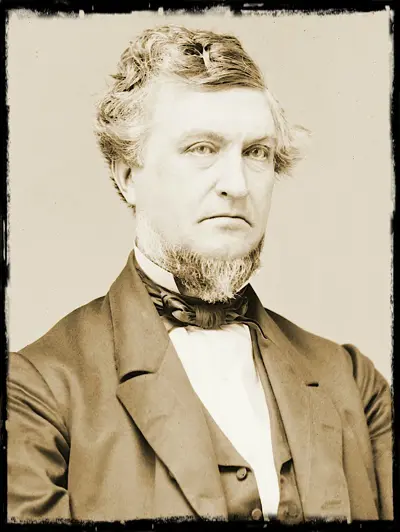
Zachariah T. Chandler was an American businessman, politician, one of the founders of the Republican Party, whose radical wing he dominated as a lifelong abolitionist. He was mayor of Detroit, a four-term senator from the state of Michigan, and Secretary of the Interior under President Ulysses S. Grant.
