Fiorello H. La Guardia Quotes
Some men who claim to be exponents of Republican principles know as much about the teachings of Abraham Lincoln as Henry Ford knows about the Talmud.
The Talmud is a Jewish legal and ethical collection; Henry Ford was a well known anti-Semite of the time.
Fiorello H. La Guardia, 1882-1947, U. S. Congressman (Republican & Socialist, NY), New York City Mayor (Republican and Fusion Party), New York Evening Journal, August 5, 1922
Sourced by: Eigen's Political and Historical Quotations

While Douglas and Lincoln were political opponents with little love lost between them, both were patriots. Douglas’s position were much more popular in the South, and the moment he realized that Lincoln would win the Presidency, he headed South where he was very persuasive in trying to hold the Union together, but he could not see all the potential rebels and was only effective with some. South Carolina not only seceded, but in order to prevent any changing of minds, some the worst of the South Carolinians, attacked Fort Sumter firing on the American Flag and attacking and capturing the Union troops who were totally outnumbered. The Civil War was then inevitable.


At the time, the prevailing federal policy was to return fugitive slaves to their owners. Lincoln was intent on keeping Kentucky and Maryland, both slave states, in the union, even at the cost of returning fugitive slaves. Shortly after, he came up with the policy of always returning fugitive slaves except in the rebellious states of the confederacy where the slaves were legally defined as ‘contraband’—war material, and thus could be seized by Union forces. Many fugitive slaves were thus employed by the Union for construction projects. Later, the Emancipation Proclamation set the slaves of the Confederacy free.
Oates was a Confederate Colonel during the Civil War. His statement almost started a brawl as the Memorial Dedication was a joint North-South participation event. Northern politicians, officers and men were outraged and rose to their feet with several mounting the rostrum to refute Oates intemperate remarks. However, like Southern politicians of the 1960s, they produced a lot of redneck support with such extreme statements. The main reason this quotation is important is that most politicians of North and South wanted to get the animosity of the Civil War over with and to do so sponsored these memorial events where both sides could celebrate and remember the bravery of men fighting and dying for their cause. The photographs of former enemies shaking hands which the newspapers ran frequently, would give the impression that by the 1880s the hatred and animosity of the Civil War was behind the nation. However, that was not at all true. Most veterans of both sides maintained their hatreds throughout their entire lives. Even their children carried the hatred into the next generation. Politicians were expected to not open the scabs of the old wounds in public, but many like Oates found political utility in not doing so. The moral outrage of many in the North remained until WWII when regional unity genuinely transcended the Civil War. See {639364} for a Northern example with no political motive but with uncontrollable moral outrage.


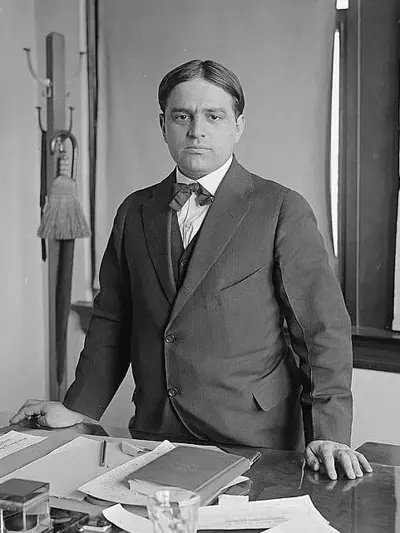
Fiorello Henry La Guardia was an American attorney and politician who represented New York in the House of Representatives and served as the 99th Mayor of New York City from 1934 to 1945. Known for his irascible, energetic, and charismatic personality and diminutive stature, La Guardia is acclaimed as one of the greatest mayors in American history. Though a Republican, La Guardia was frequently cross-endorsed by other parties, including the rival Democratic Party, under New York's electoral fusion laws.
