Felix Frankfurter Quotes
If facts are changing, law cannot be static.
Felix Frankfurter, 1882-1965, U. S. Supreme Court Justice, Law and Politics
Sourced by: Eigen's Political and Historical Quotations


The Grammar Curmudgeon. This is one side of a fundamental argument within America as to the Constitution. The other side argues that the original intent of the Founding Fathers should prevail. That their principles are what has made America great, and we do not want to deviate from those. In determining Constitutionality, it is the original intent that should prevail even if the issues are ones of which the founding fathers had no inkling such as the ability of a nuclear power to destroy much of the nation before Congress could be called into session or that police could use geo-positioning devices to track the movement of citizens. Or that women could prove themselves the equal of (or superior to) in intellectual pursuits and would want to participate in politics and policy making.


Every time a court decides on the constitutionality of something that did not exist at the founding, the meaning is enlarged somewhat. For example is hacking into a computer a violation of the Due Process clause? Are Americans who are entitled to bear arms allowed to choose any arms now existent—ie biological weapons? Is a President who is brain dead but is breathing and kept alive by artificial means to be replaced by the Vice President? The U.S. Constitution is the oldest constitution of all the industrialized democracies, and yet if functions in a world the Founding Fathers would not recognize. The courts and the Amendments have kept it fundamental to our nation and still an example to the world.

The Chinese had a custom of binding the feet of female young children so that they would never grow large. Small feet were considered beautiful. However, the woman was almost crippled by the process and could barely walk.


This quotation is an excellent statement of the argument of interpreting a constitution—in this case Wisconsin’s—in light of modernity or to only interpreted consistent with the original intent and mindset.


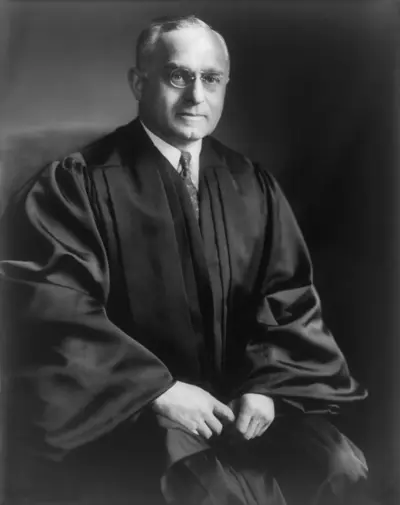
Felix Frankfurter was an American lawyer, professor, and jurist who served as an Associate Justice of the Supreme Court of the United States. Frankfurter served on the Supreme Court from 1939 to 1962 and was a noted advocate of judicial restraint in the judgments of the Court.
