George Carlin Quotes
If crime fighters fight crime, and fire fighters fight fire, what do freedom fighters fight?
George Carlin, 1937–2008, 1937-2008, Comedian, Quoted in “Clever Comedy Of George Carlin, 1937–2008” Hartford Courant, June 24, 2008
Sourced by: Eigen's Political and Historical Quotations

The glorious spectacle of eighteen millions of people, struggling to burst their chains and be free.
The entire speech was translated into Spanish and read to great applause to Latin American revolutionary regiments.


Helen Keller was a remarkable woman who was blind and deaf, and yet she became a great orator and social reformer.

Those who have fought against dictatorial governments for their basic human rights, found after victory and the overthrow of the dictator, that there was another force fighting for control which would deny citizens human rights based on a theocracy. They wanted the end of the dictator so they could use their interpretation of a religion as the excuse to deny all citizens basic human rights.


The revolutionists were disorganized and unfocused after the Coup that brought them to power. This speech provided some focus for a while. Early in his career, as a Journalist working in Leiden, Holland, he was very active and helpful to the Dutch Patriots and Revolutionaries in their takeover of the government. He helped draft the New Dutch Constitution and participated in most of the new governments conventions.

Marion was the initiator of Guerilla Warfare and he and his men traveled lightly spending much time in the South Carolina swamps. They had few supplies and when chased by the British could not stop to hunt. The British called him the “Swamp Fox”. The American colonists at this point still thought of the British as “their countrymen.”


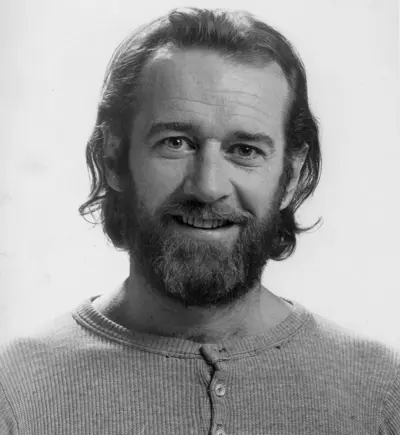
George Denis Patrick Carlin was an American stand-up comedian, actor, social critic, and author. Regarded as one of the most important and influential stand-up comics of all time, he was dubbed "the dean of counterculture comedians". He was known for his dark comedy and reflections on politics, the English language, psychology, religion, and taboo subjects. His "seven dirty words" routine was central to the 1978 United States Supreme Court case F.C.C. v. Pacifica Foundation, in which a 5–4 decision affirmed the government's power to censor indecent material on the public airwaves.
