Paul R. Ehrlich Quotes
I would take even money that England will not exist in the year 2000.
Ehrlich, Paul R. Quoted in "Paul Ehrlich on Population," New Scientist, vol. 44, 1969, p. 556.


Flaccus

This classic quotation ought to be considered by all politicians who warn of current trends of which they are very worried. See {627459} for another of his related quotations.

Abraham Lincoln's election came at a time when the preservation of the United States as one nation was in question. Many, including the incumbent President, had little confidence in Lincoln's capacity to govern:


He had standard barometers made and distributed widely, accumulating the data and predicting the weather. Although crude and inaccurate by modern standards, his system was a vast improvement over earlier efforts. Today, we use the term for economics and politics as well.

Most scientists do not have the skill or the totality of knowledge to accurately predict the effect of scientific research and learning on society. Many are not interested. Those who try to communicate with politicians and the public are usually met with indifference or suspicion. Above all, the scientific and mathematical literacy of the public is so weak, that it is impossible in much of science to even explain the science to the lay public much less explain its implications. Soddy was a bit of an idealist from a class society and he felt the upper classes should be better informed by scientists.

Cayley developed the first gliders and envisioned air travel at the same time that Thomas Jefferson was President.


Walters who had been a brilliant military intelligence officer—and is in the Intelligence Hall of Fame—saw the fall of the Berlin Wall coming and had made some preparations. However, no one else in the government paid any attention to his prediction because the CIA and the NSA as well as the DOD Service Military Intelligence units all had nothing suggesting such a possibility in all their reports. They were all relying on spies. But the East Germans and the Russians had no idea that the fall of the Berlin Wall was a possibility, and their assessments said that it was not possible. Our spies reported that and out intelligence agencies assumed that they knew what they were talking about. Walters, however, based his judgment on reading very thoroughly all the publicly available information, and visited the American Zone of Berlin and inspected the Wall, its culture, the reports from the East Germans who had managed to escape, and it was very clear to him.

“Ministers” in England are the members of Parliament who are party leaders of the majority party and members of the cabinet. The Prime Minister is also a member of Parliament unlike America where the executive officers are not members of Congress and we have separation of powers. In England, the executive branch, the legislature and the Supreme Court are all members of Parliament.

The seeds of revolution were sprouting. That year there were over 2400 strikes in Czarist Russia where a strike was unheard of just a few years before. Four years after this prediction, Russia erupted in revolution and bloody civil war. The standard of living for all Russians would crash and not recover for decades.

Over a decade later a leading English politician realized the same possibility and took steps to prevent it {636871}. Brazil was a colony of Portugal which grew at so fast a comparative rate, that Brazil became many times the size of the original mother country.
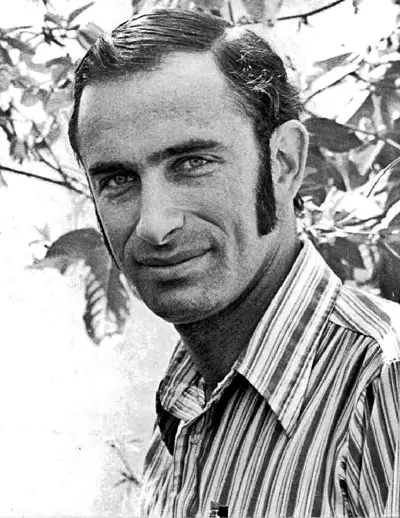
Paul Ralph Ehrlich is an American biologist, best known for his warnings about the consequences of population growth and limited resources. He is the Bing Professor Emeritus of Population Studies of the Department of Biology of Stanford University and President of Stanford's Center for Conservation Biology.
