Saxby Chambliss Quotes
I would never filibuster any President’s judicial nominee, period. I might vote against them, but I will always see they came to a vote.
Chambliss, Saxby. Remarks on Judicial Nominees. Congressional Record, vol. 148, U.S. Government Printing Office, 2002.


Most legislative bodies have rules about when and under what conditions a vote is taken. Amendments, procedures, committees all have procedures where votes may be taken that could defeat a nomination or a proposed law but if those defeats fail, there still is not necessarily a law passed or a nomination confirmed. That has to be a separate vote, often called an “up or down vote.” One parliamentary mechanism for opposing a bill or a nomination is to keep voting on amendments and procedures and never have an up or down vote. This is actually true with the vast majority of the laws proposed in both houses of the Congress. Most never do have an up or down vote. Why Gerhatdt and other ask should judicial nominations be different from any law, or any other presidential nomination? Also see {588517} for another factor.

The Cloture motion was the motion to terminate the Southern Filibuster against the Civil Rights Act of 1964. Johnson needed substantial Republican support as the Solid Democratic South was all opposed to any kind of civil rights legislation. What is interesting is that Johnson, known as the champion arm twister, knew when to twist and when not to. Mundt, although a serious conservative and generally opposed to the Federal government controlling local human interaction, had also been a school superintendent and was a decent and fair-minded man who was personally offended by the over a century of unfair discrimination and overt racism. Johnson would either have Mundt’s vote from conviction or he would not get it, and pressure was not likely to work with him.


In the early days of the Senate Filibuster, a senator could hold the floor (and halt all actions) as long as he could continue to speak or 3/5 of the Senate voted to end the filibuster. The filibuster imposed a physical burden on the Senator who chose to use it. Likewise, the other Senators had to be present in sufficient numbers to have a quorum, else the Filibusterer would be able to rest at he did not have to continue to speak if there was not a quorum. The Senate rules were changed to allow a Senator to “announce” a filibuster of a bill, and all action on that bill would stop but there was no burden on the filibustering senator or other senators who had to form the quorum. But in the 112th Congress, the Republicans resorted to more filibusters than there had been in the entire previous history of the Senate and Nelson wanted to return to the old requirement of holding the floor physically.

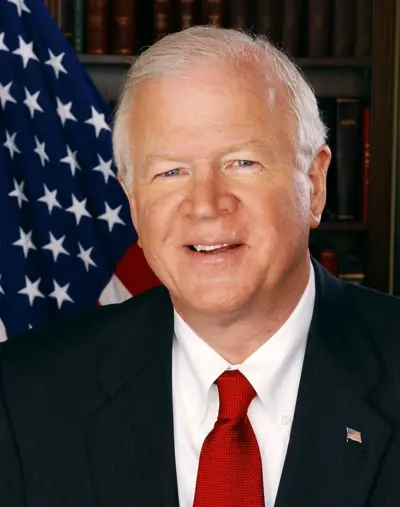
Clarence Saxby Chambliss is an American lawyer and politician who was a United States Senator from Georgia from 2003 to 2015. A member of the Republican Party, he previously served as a U.S. Representative from 1995 to 2003.
