Brett Kavanaugh Quotes
The Senate should consider a rule ensuring that every judicial nominee receives a vote by the Senate within 180 days of being nominated by the president.
Kavanaugh, Brett M. "Separation of Powers During the Forty-Fourth Presidency and Beyond." Minnesota Law Review, vol. 93, no. 5, 2009, p. 1471.


Most legislative bodies have rules about when and under what conditions a vote is taken. Amendments, procedures, committees all have procedures where votes may be taken that could defeat a nomination or a proposed law but if those defeats fail, there still is not necessarily a law passed or a nomination confirmed. That has to be a separate vote, often called an “up or down vote.” One parliamentary mechanism for opposing a bill or a nomination is to keep voting on amendments and procedures and never have an up or down vote. This is actually true with the vast majority of the laws proposed in both houses of the Congress. Most never do have an up or down vote. Why Gerhatdt and other ask should judicial nominations be different from any law, or any other presidential nomination? Also see {588517} for another factor.

The issue of how the federal judiciary would be selected was one of the more hotly debated issues during the Constitutional Convention.


The Republican controlled Senate whose Judiciary Committee and voted overwhelmingly for the President’s nominee for Attorney General, Loretta Lynch, but the Senate Republicans refused to the nomination up for a vote unless the Democrats and the President would agree to add an abortion ban on money that was to be appropriated for assistance to trafficked and sexually exploited women and girls. Never before had a nomination like this have been subject to this type of blackmail over terms of legislation on a matter that had nothing to do with the nominee or the cabinet position. However, this was the time one of the extreme periods of hyper partisanship in American History.


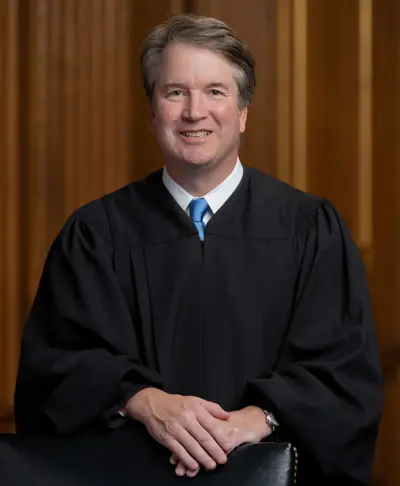
Brett Michael Kavanaugh is an associate justice of the Supreme Court of the United States. He was nominated by President Donald Trump on July 9, 2018, and has served since October 6, 2018. He was previously a United States circuit judge of the United States Court of Appeals for the District of Columbia Circuit and worked as a staff lawyer for various offices of the federal government.
