Galileo Galilei Quotes
I would beg the wise and learned fathers (of the church) to consider with all diligence the difference which exists between matters of mere opinion and matters of demonstration. ... [I]t is not in the power of professors of the demonstrative sciences to alter their opinions at will, so as to be now of one way of thinking and now of another. ... Demonstrated conclusions about things in nature of the heavens, do not admit of being altered with the same ease as opinions to what is permissible or not, under a contract, mortgage, or bill of exchange.
He was being pressured to recant some of his astronomical findings and demonstrations—especially the statement that the Earth revolved around the sun. (The church doctrine had it the other way around.) Here he seeks sympathy with his plight.
Galileo Galilei, 1564-1642, Italian Scientist, Letter to Cristina di Lorena, Grand Duchess of Tuscany, 1615
Sourced by: Eigen's Political and Historical Quotations


Priests at the time were mostly uneducated. They would tend to make up their own Biblical stories that the people would prefer rather than the official church versions. The bishops wanted this practice stopped.

In addition to being a Roman Catholic priest, Father Coughlin was an outspoken radio commentator who was well known for his controversial political opinions, see {598783}, {598784}.

Diversarum Hereseon Liber. This compendium of heresies would be funny but for the fact that people lived and died according to their “acceptance” of some of these absurdities.

The Roman Catholic Church then maintained that salvation was dependent upon obedience to the Pope in all things civil and religious. See {595166} for the way that the Church at the time allowed some authority to civil authorities.

His writings drew the ire of the British Clergy, the leading figures of which, taught the literal interpretation of the Old Testament. The political leadership was also hostile to his views and even refused to grant one of his books a copyright on the grounds that it undermined and corrupted the morals of the public.

This view was infuriating to the Rabbis, Priests and Immams of the time. Miracles and Scrip[ture were not determinatve Spinoza taught but the issue was did the docrine of the religion make sense. Spinoza’s ideas were considered so radical and dangerous that he was the only man in history who was excommunicated by the Catholics, the Jews and the Muslims.


While this statement is accurate as far as the majority of modern Jewish theologians are concerned there are some fundamentalist, ultra orthodox, Jewish rabbis who would disagree.

This began the Church's most notorious attack on any dissent or disagreement and it was the start of the Inquisition.


Ingersoll was considered to be the greatest orator and political thinker of his day, but his overt atheistic views curtailed his elected political career.

See {610517} for the Papal Bull which “gave” Ireland to England. There has been some dispute over whether this was a forgery to support the authenticity of the Papal Bull which itself was questioned.


Official List of groups which were prohibited from religiously criticizing the Catholic Church—the established church of Maryland. One interesting observation is that the Jesuits—a Catholic order were on this list. Catholic orders did not then subject their representatives to the authority of the local bishops and took direction only from the Pope. In the case of the Jesuits at the time, there were many who believed the Jesuits were beyond the de facto control of the Papacy and some Jesuits thought they should be—thus the two designations of Jesuits. This makes clear the fundamental intolerance that was common on many parts of Colonial America, that criticism of and heresy to the Established Church was not to be permitted. To the orthodox Catholics of Maryland, they were as concerned with the potential criticisms of Catholic Jesuits as they were with those of Puritans or Anabaptists. Compare Maryland, a Catholic colony with a huge antipathy towards Puritans, with Massachusetts, a Puritan Colony, and its strong antipathy and intolerance for Catholics. It is almost impossible to imagine a union of the American colonies without a 1st Amendment.


The Church no longer believes this of course. Having learned from this unfortunate experience and Galileo’s persecution, today the Roman Catholic Church is one of the more advanced religious institutions in accepting modern science.
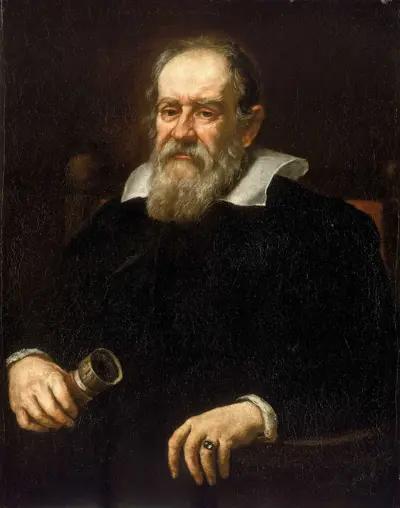
Galileo di Vincenzo Bonaiuti de' Galilei was an Italian astronomer, physicist and engineer, sometimes described as a polymath, from Pisa. Galileo has been called the "father of observational astronomy", the "father of modern physics", the "father of the scientific method", and the "father of modern science".
