Murray Bookchin Quotes
I was a Stalinist in the '30s. I had come from a Russian revolutionary family who simply were elated by the fact that the Czar was overthrown by this group known as the Bolsheviks. My family identified with anybody who overthrew the Czar. So they identified themselves intuitively with Bolshevism.
Bookchin, Murray. "Interview with Murray Bookchin." Interview by Jeff Riggenbach. Reason, vol. 11, no. 6, Oct. 1979, p. 34.


1st Earl Lloyd-George of Dwyfor. This turned out to be one of the worst predictions in political history.


After the 1917 Russian Revolution many of the Western Countries sent troops to Russia where they aided the Whites against the Reds. When the Red Bolsheviks prevailed, there were many attempts to diplomatically and economically undermine the Communist government. This caused a unity among different Russian factions. Sforza urged leaving them alone and letting the Bolsheviks fail by their own ideology. Most Western nations and the United States did not agree with him.

Seeger’s admission was typical of tens of thousands of Americans who had become disillusioned with the fairness, equity, and effectiveness of capitalism during the depression. They were easy prey for Communist propaganda which pointed out all the problems in American society from legal racial discrimination to lack of a social safety net while at the same time lying about the Russian achievements and hiding the horrible abuses of human rights—especially the political murders of millions of people. Then the truth about Russia emerged, Seeger and so many others abandoned the Communist Party as at the same time America was improving its society and beginning to try and deal with the great problem that had plagued America from its inception—racism and slavery.

After the Russian Revolution in 1917, there was a vicious civil war and the Communists governed ruthlessly not even pretending to follow the democratic principles that they had espoused before they can to power. This was a typical intellectual rationalization of a dictatorial behavior that lasted until the fall of Communist Russia. However, at this time most supporters thought that things would soon change. They only got worse culminating in Stalin’s atrocities. The Bolsheviks were the ruling communist party in Russia.


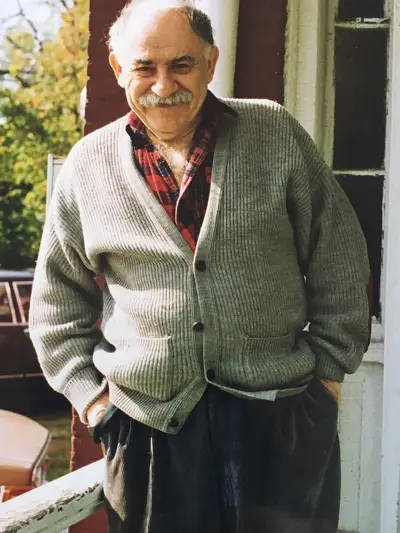
Murray Bookchin was an American anarchist, political philosopher, trade-union organizer, and educator. A pioneer in the environmental movement, Bookchin formulated and developed the theory of social ecology and urban planning, within anarchist, libertarian socialist, and ecological thought. He was the author of two dozen books covering topics in politics, philosophy, history, urban affairs, and social ecology. Among the most important were Our Synthetic Environment (1962), Post-Scarcity Anarchism (1971), The Ecology of Freedom (1982) and Urbanization Without Cities (1987). In the late 1990s, he became disenchanted with what he saw as an increasingly apolitical "lifestylism" of the contemporary anarchist movement, stopped referring to himself as an anarchist, and founded his own libertarian socialist ideology called communalism, which seeks to reconcile Marxist and anarchist thought.
