Clara Zetkin Quotes
The use of the strong hand is the essential characteristic of Bolshevist activity. This is not ideal, but unavoidable. It may be contrary to the prescriptions of democracy, and yet it subserves the interests of democracy. If, for all who live in Russia, democracy is to become an energy-diffusing socialistic reality, the Bolsheviks cannot escape the necessity of sacrificing, as a transient measure, the rights of certain individuals and of certain social groups. That this should happen is an inevitable feature of historic evolution …. The Bolshevist leaders of revolutionary Russia are engaged in a war of unparalleled significance. Here the moral and political standards of everyday life fail us. On this colossal stage, individual measures and individual phenomena are dwarfed into insignificance. The drama is one of overwhelming historic import, and it must be accepted or rejected as a whole
After the Russian Revolution in 1917, there was a vicious civil war and the Communists governed ruthlessly not even pretending to follow the democratic principles that they had espoused before they can to power. This was a typical intellectual rationalization of a dictatorial behavior that lasted until the fall of Communist Russia. However, at this time most supporters thought that things would soon change. They only got worse culminating in Stalin’s atrocities. The Bolsheviks were the ruling communist party in Russia.
Clara Zetkin, 1857-1933, German International Secretary, Tailors and Seamstresses Union, National Executive member of the German Social Democratic Party, Secretary of the International Bureau of Socialist Women, Through Dictatorship to Democracy, 1919
Sourced by: Eigen's Political and Historical Quotations

1st Earl Lloyd-George of Dwyfor. This turned out to be one of the worst predictions in political history.

Commenting on political parties in Cuba:

This was a big factor that made the Red Scare so damaging.

After the 1917 Russian Revolution many of the Western Countries sent troops to Russia where they aided the Whites against the Reds. When the Red Bolsheviks prevailed, there were many attempts to diplomatically and economically undermine the Communist government. This caused a unity among different Russian factions. Sforza urged leaving them alone and letting the Bolsheviks fail by their own ideology. Most Western nations and the United States did not agree with him.


This was one of the first of the world communist leaders who had concluded that the Russian communist state and its revolution had failed. Russia of 1923 was perceived as too dictatorial and not democratic enough. At the same time they thought Russia had not only sold out the democratic nature of communism but also the economic as well by having too much private property and making economic deals with Western capitalists giving concessions of all kinds to Krupp and other major Multinational companies to try and develop international trade and investment. Politically the communist critics thought Russian communism too left wing and undemocratic and economically too right wing and capitalistic.

Despite the fact that many Americans saw communists and socialists as of the same ilk, socialists were very suspicious of communists—especially the “party discipline” and the lack of individual freedom, while the communists saw the socialists as just another form of fascism and attacked it violently. Later, the party line against socialists softened as Cold War communist strategy solicited assistance from the socialist, unaligned nations.

Harriman at that time was the United States Ambassador to Russia and one of President Roosevelt’s closest advisers. There were those who claimed that the Roosevelt administration was very naïve about the potential danger of Stalin. This statement as well as others like it, show that the administration was not so naïve and ignorant.

In 1921 an Paul E. De Mott, an American Quaker famine relief worker in Germany was arrested as a "Bolshevik" and murdered without trial. American correspondents heard about the crime and asked for a statement from the chief American diplomat in Germany.


Vladimir Lenin. While Lenin was of this view, Stalin and other hard liners disagreed. They not only imposed their brand of communism on their own people via force with terrible consequences for any dissidents, but the Soviet Army imposed Communism on most of the states of Eastern Europe, and those states in turn used their Armies and secret police to impose it on their own citizens.


This is a very important historical, political quotation. The conservatives have since the Russian Revolution conflated socialism and communism. However, here in 1932 the leader of the American Socialist Party had already described the Communist Revolution in Russia as a failure of founding an acceptable modern state. Nonetheless, even into the 21st century many conservatives describe Thomas as a Communist. See {626692} for his distinction between Communism and Socialism. The difficulty of modern nation building was explained by Thomas and others but was really not accepted until the many attempts of the early 21st century, some supported by America like Iraq and Afghanistan and the Balkans and others like the “Arab Spring.” Then his early wisdom on this point became more appreciated.

This was a very important quotation in that Sartre was a very influential liberal philosopher and when he condemned Russian communism, many other liberals opposed communism, and those who had already felt vindicated in their decision.


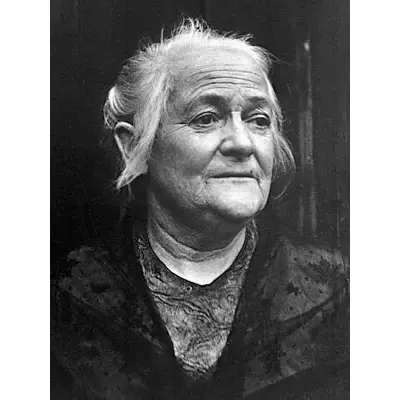
Clara Zetkin was a German Marxist theorist, communist activist, and advocate for women's rights.
