Henry M. Jackson Quotes
I want to see a reasonable profit, a fair profit, but we can't tolerate obscene profits.
Referring to the oil companies:
Henry M. Jackson, 1912-1983, U. S. Congressman & U. S. Senator (Democrat, WA), 1974
Sourced by: Eigen's Political and Historical Quotations


He had been told that the Air Force was planning to buy to ne, next generation planes for use as Air Force One for the President and that the price tag was to be $4 Billion. He thought that price exhorbetent, and this quotation came from one of his Tweets.

The company’s profits were $5.7 billion--$45,000 per employee. He then imposed a 6 year wage freeze on long term employees and cut the wages of new employees. His compensation has increased 80 percent in the last 2 years. Most large corporation CEOs do not share this need for “unlimited” profits. Most set a target and then try and get the corporate team to reach or exceed it.


Prior to Baxter the issues in prosecuting an anti-trust case were whether or not the company met the size or market share criterion for application of the anti-trust law and whether the company had committed any of the prohibited acts. Baxter added another hurdle. Namely, that the prosecution must make economic sense for the company, the consumer and/or the nation. Many illegal, immoral and unfair antitrust practices were not prosecuted if there was no economic benefit to doing so. Critics of the new policy argued that nowhere in the language of the anti-trust legislation that prosecution should not take place in the absence of demonstrable economic benefit.


At the time this was generally true for most businesses. However, in a modern economy, there are other ways. Increasing volume, automation, innovating products and services to get premium prices naw are standard techniques.


The President had decided to aggressively push for railroad regulation to end the rate rebate abuses that were used to support the monopolies like Standard Oil. In vintage Roosevelt tactics, he gave his first major speech on the subject in the setting and forum that would be most opposed to it. The Union League Club of Philadelphia in included the wealthiest men in the area where were most opposed to any Federal Regulation of anything. All the major railroad executives and stock owners and traders were also members. The President wanted to persuade the opponents to change their positions, and sometimes he did. He also was driven by his concept of sports and athletics so that the “opposition” should have “fair notice” for the contest ahead.


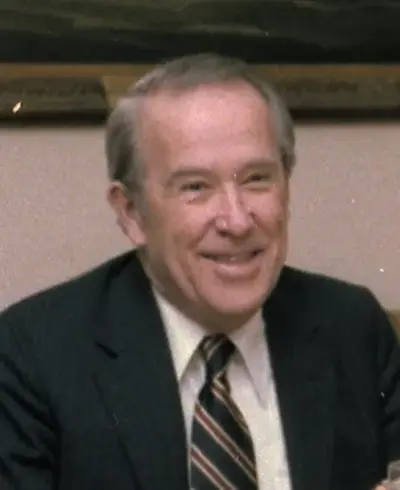
Henry Martin "Scoop" Jackson was an American lawyer and politician who served as a U.S. Representative (1941–1953) and U.S. Senator (1953–1983) from the state of Washington. A Cold War liberal and anti-Communist Democrat, Jackson supported higher military spending and a hard line against the Soviet Union, while also supporting social welfare programs, civil rights, and labor unions.
