Cary Fukunaga Quotes
I used to do Civil War re-enacting between the ages of 15 and 19. I was part of a unit that was considered very authentic. We would source the right wools, the right buttons for the costumes. We had the right look.
Martin, Denise. "True Detective Director Cary Fukunaga on the Finale, Matthew McConaughey, and Civil War Reenacting." Vulture, Vox Media, 9 Mar. 2014.


This was one of the perceived advantages of the South—that the North, with its more complex and sophisticated society, would pay a higher economic price by fighting than the South would. Southern whites didn’t work or farm much and they could fight and the older men and slaves could keep the agriculture and economy going. However, the huge superiority of the North in productivity and technology, in farming, manufacturing, transportation and military offset the Southern advantage do a great degree. But when the North attracted so many of the Southern Negro slaves to their lines, the Southern labor force was diminished greatly for the first time. And Sherman’s March showed how the entire Southern economy could be crippled and the war was strategically lost by the Confederates. The reality of superiority of the North and the attitude of elites like Emerson in freely discussing that fact, was resented by Southerners then and since. There is to this day a Southern resentment of intellectuals and highly educated people—a vestige of the reality of differences existing in the 1860s and since. It was not until the 1950s that the South started developing educational and cultural institutions and populace that is on a par with the rest of the nation. But the states which spend less per capita on educational and cultural institutions, tend to have the poorest educational attainments of their citizens and they are mostly states of the deep South where values are still somewhat different from the North.


While there were atrocities committed by both sides in the Civil War, the proportion tended to be heavily weighted by Confederate perpetrations. The Confederate officers were not appointed by the command structure and under strict military discipline, but they were elected by the troops and could be so removed (except for the general officers who were appointed by the confederacy). Also, the confederate troops were not as well fed or supplied as the North and they had fewer resources with which to fulfill their obligations to prisoners. In a number of battles, ill-clothed soldiers stripped the Union dead, wounded and prisoners, often naked to use their shoes, blankets and clothing, Union prisoners of war were much more badly abused in the prisoners of war camps like Andersonville which were not under the command of Robert E. Lee.

The ultimatum was rejected, Cromwell’s forces took the town and massacred the defenders as well as many civilians. See {632366}.


At this point, there had hardly been any fighting and no outrages or war crimes were yet committed by either side. These would come later—more on the Confederate side as they did not want to take the limited resources they had from their troops to fulfil abstract obligations to prisoners of war or to civilians. A few deliberately chose to use terror tactics. The Union troops also at various points in the war got out of hand and looted personal property of civilians. But at this point, this proclamation was just lies and propaganda.

This quotation is important because it is one of the few judgments and predictions Lincoln made that turned out to be very wrong. Even into the 21st century there are Americans with bad feelings and hostility about the Civil War.

Lincoln and the Union leaders were still hopeful of ending the rebellion and getting things back to a pre-war footing economically. At this point they were trying to preserve components of the Southern Economy at no small cost. As that hope was shown to be futile, the Total War strategy of Grant and Sherman prevailed to the satisfaction of men like Opdycke. That actually ended the war quickly, but the Southern Economy was devastated in the process.


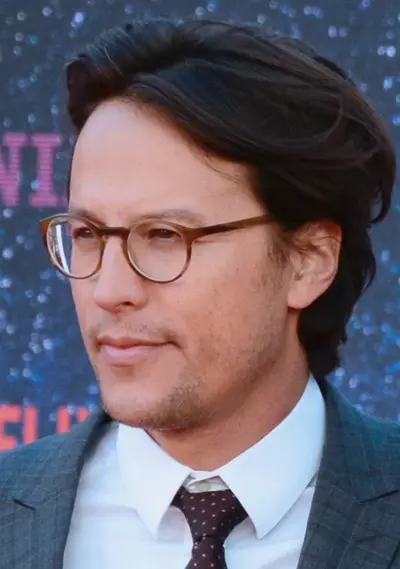
Cary Joji Fukunaga is an American filmmaker and television director.
