Cary Fukunaga Quotes
I'd done the method bit before from, like, age 15 to 19. I was a Civil War re-enactor.
Martin, Denise. "True Detective Director Cary Fukunaga on the Finale, Matthew McConaughey, and Civil War Reenacting." Vulture, Vox Media, 9 Mar. 2014.


This was one of the perceived advantages of the South—that the North, with its more complex and sophisticated society, would pay a higher economic price by fighting than the South would. Southern whites didn’t work or farm much and they could fight and the older men and slaves could keep the agriculture and economy going. However, the huge superiority of the North in productivity and technology, in farming, manufacturing, transportation and military offset the Southern advantage do a great degree. But when the North attracted so many of the Southern Negro slaves to their lines, the Southern labor force was diminished greatly for the first time. And Sherman’s March showed how the entire Southern economy could be crippled and the war was strategically lost by the Confederates. The reality of superiority of the North and the attitude of elites like Emerson in freely discussing that fact, was resented by Southerners then and since. There is to this day a Southern resentment of intellectuals and highly educated people—a vestige of the reality of differences existing in the 1860s and since. It was not until the 1950s that the South started developing educational and cultural institutions and populace that is on a par with the rest of the nation. But the states which spend less per capita on educational and cultural institutions, tend to have the poorest educational attainments of their citizens and they are mostly states of the deep South where values are still somewhat different from the North.

Some Southerners, in order to obtain support in England for the Confederate cause claimed in their propaganda that slavery was not the issue but their issue with the Union was just one of local and regional autonomy. The British and most Europeans at that time were strongly against slavery so this “spin” might have gotten some support. Stowe and others put the lie to this, and the Confederacy never did get any significant material support from any country in Europe. The secession resolutions of the Southern States all state that Slavery was the cause (and often the ONLY cause stated) of secession. Also Southern General Mosby, called the spin for what it was. See {584991}.

The Virginia Campaign of May 1864 was clearly the beginning of the end of the war. This was clear at the time, not only to the military leaders of both sides, but also to the media and thence the general public in the North. At the beginning of the war the Army of the Potomac, the largest Union Army was commanded by McClellan whose concerns were with his own political career and not winning the war. He had an aversion to heavy fighting and did not see the war strategically as Lincoln, Grant and Sherman did: To cripple the capacity of the South to wage war. So the early history of the Army of the Potomac was a series of undecisive battles which were either standoffs or the Confederates won despite the much larger and better armed and equipped Union army. As soon as McClellan was replaced, things began to turn around and when Grant was selected for Command of all Union Troops, the Army of the Potomac performed much better, including taking Richmond, the Confederate Capital.

He stated that he had a vision and made these two prophesies that indeed came true. The first was the South Carolina secession starting the Civil War. The second, when the North used former slaves as soldiers who fought their old masters.

Much of the South was so insular that people knew nothing about the notion of abolition and just assumed that no one would ever consider freeing the slaves. Many never knew that it was the South that first fired on the Union troops and flag. If the North won the war, the assumption was that Northerners would then own the plantations and the valuable slaves. In reality, while all slaves were emancipated in the South, very few plantations and farms were confiscated from their Southern owners by Northerners despite the fact that there was political pressure in the North to confiscate the land of all rebels who had committed treason and use the value to repay the Union bonds and care for the wounded Union veterans and the widows of dead Union Soldiers. Eggleston was an accomplished writer who had served in the Confederate army of the Civil War. 20 year after the war he wrote a series of articles for the prestigious Northern Atlantic Monthly trying to convey the war from the Southerner’s point of view.

That is the way he was killed. The phrase, “We are bound to believe that, anyhow” indicates that Stuart really realized how futile the Southern war effort would be but loyalty and patriotism required him to suspend his rational belief structure.

More new technology was deployed in the Civil War than any other war in history and Moltke did not realize that the classic European military tactics were obsoleted. However, neither did most of the Southern Generals and many of the Union Generals. Lincoln, Grant and Sherman were the ones who developed strategies and tactics to function in the new world of warfare.

The national troops acquired a confidence … at Belmont, that did not desert them throughout the war.
The battle had little strategic value, but was very significant as the Western Union troops gained an espirit de corps and a battle tested confidence.


While there were atrocities committed by both sides in the Civil War, the proportion tended to be heavily weighted by Confederate perpetrations. The Confederate officers were not appointed by the command structure and under strict military discipline, but they were elected by the troops and could be so removed (except for the general officers who were appointed by the confederacy). Also, the confederate troops were not as well fed or supplied as the North and they had fewer resources with which to fulfill their obligations to prisoners. In a number of battles, ill-clothed soldiers stripped the Union dead, wounded and prisoners, often naked to use their shoes, blankets and clothing, Union prisoners of war were much more badly abused in the prisoners of war camps like Andersonville which were not under the command of Robert E. Lee.

The ultimatum was rejected, Cromwell’s forces took the town and massacred the defenders as well as many civilians. See {632366}.
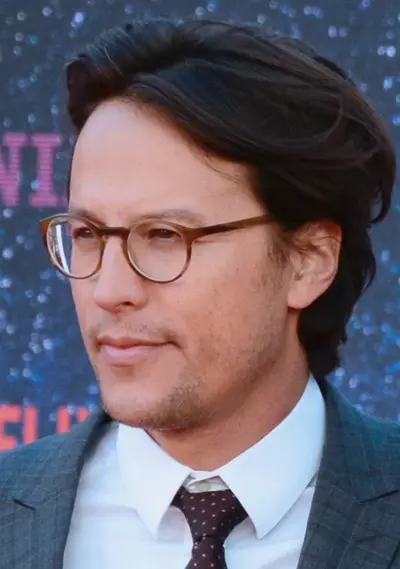
Cary Joji Fukunaga is an American filmmaker and television director.
