John Philpot Curran Quotes
I speak in the spirit of the British law, which makes liberty commensurate with, and inseparable from, the British soil--which proclaims, even to the stranger and the sojourner, that the ground on which he treads is holy, and consecrated by the genius of universal emancipation. No matter in what language his doom may have been pronounced; no matter what complexion an Indian or an African sun may have burnt upon him; no matter in what disastrous battle his liberty may have been cloven down; no matter with what solemnities he may have been offered upon the altar of Slavery; the first moment he touches the sacred soil of Britain, the altar and the god sink together in the dust--his spirit walks abroad in its own majesty--his body swells beyond the measure of his chains, and he stands redeemed, regenerated and disenthralled, by the irresistible genius of universal emancipation.
There are probably no more eloquent words that have ever been uttered on the subject of slavery.
John Philpot Curran, 1750-1817, Irish Member of English Parliament, Master of the Irish Rolls and Privy Councilor, Statement on the relationship between Britain and slavery
Sourced by: Eigen's Political and Historical Quotations


Fitzhugh was a Southern iconoclast whose view of Northern labor was much like that of Karl Marx but who was an enthusiastic supporter of slavery. Fitzhugh was of the opinion that slavery would be reinstated in the North and his treatise agues for that. More and more intellectual opinion was coming to the conclusion that slavery must be abolished or made universal before Lincoln’s famous statement in his debate against Douglas. Although Northerners and Southerners had come to agree on this point, they disagreed about which alternative would and should prevail.

Earlier {629154} Smith was much more sympathetic with slavery. His views evolved as you can see by the comparison. He stated that he had a vision and made two prophesies {629156} that indeed came true. The last idea of slave buyouts seemed plausible to many abolitionists initially when they were not really knowledgeable about the economics of slavery. However, once they studied it, it became clear what it would not work even if the Southerners would then be willing to accept Blacks as free laborers which most were not, The two biggest problems were: 1) the international slave trade had been abolished. The only source of new slaves for growth was breeding them. Therefore, having slaves had TWO economic values—the work that they could do and the reproduction of themselves. A critical mass of owned slaves produced an income forever. And for Southerners who were culturally adverse to work (see {629169}), just having cash for their slaves was not enough. They were the servants, the farm labor, and their recreational sex. 2) and most important, the value or the slaves of the South was greater than the economic value of all the land, all the farms, all the buildings, all the factories, and all the inventory of the stores of the South all put together. The Southern slaves were the majority of the wealth of the south. There was no asset that could ever produce enough value to pay for the slaves—even over time. It would be like trying to buy all the shares of all the corporations in America today. There is no asset big enough to raise the money to ever finance it. The idea may have worked in Colonial America or even prior to the outlaw of the international slave trade, but by the time anyone took the idea seriously it was economically no longer feasible.


Even before we had a Constitution there was major opposition to slavery. The “price” of the American Union was the acceptance of the slavery of the South. But the hypocrisy of a country based on liberty to allow and enforce slavery was not lost on the founding fathers. Ironically the abolitionists among the founding fathers were certain that they could persuade the Southern slaveholders of the error of slavery in a few years and things would be set right in the land. Even George Washington {630626}, and Thomas Jefferson and some other slaveowners at the time wished to see its abolition. Slaveholding Southern Founding Fathers in general were so wary of the abolitionists that they achieved structural, disproportionate, power in the new Constitution to ward off the abolitionists attempts to reform slavery.


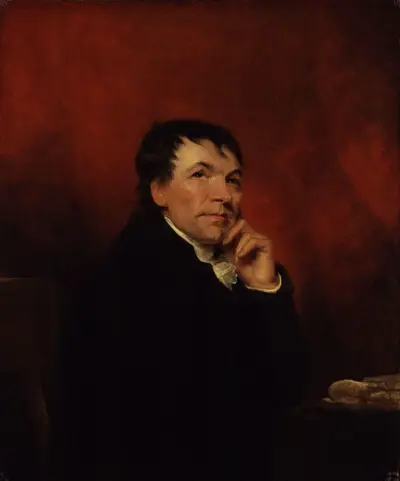
John Philpot Curran was an Irish orator, politician, wit, lawyer and judge, who held the office of Master of the Rolls in Ireland. He was renowned for his representation in 1780 of Father Neale, a Catholic priest horsewhipped by the Anglo-Irish Lord, Viscount Doneraile, and in the 1790s for his defence of United Irishmen facing capital charges of sedition and treason. His courtroom speeches were widely admired. Lord Byron was to say of Curran, "I have heard that man speak more poetry than I have seen written". Marx described him as the greatest "people's advocate" of the eighteenth century.
