Frank B. Kellogg Quotes
I regret very much to hear so many people, many of my own countrymen, predicting war, stating that Europe is preparing and arming for such a conflict.
Kellogg, Frank B. "The Renunciation of War." Nobel Lecture, 11 Dec. 1930, Norwegian Nobel Institute, Oslo. Nobel Lectures, Peace 1926-1950, edited by Frederick W. Haberman, Elsevier Publishing Company, 1972.


Unusually for a scientist, Szilard was politically very astute. In this letter he predicted exactly what was going to happen in Europe which would be WWII. He was the leading scientist organizing the lobbying efforts with the Franklin D. Roosevelt administration to develop an atomic bomb.

Everyone could see the First World War coming, but the government leaders and diplomats were not able to prevent it.


America, England, Germany and France Many Japanese leaders predicted war between the Great Powers while America and its European Allies did not see the danger as clearly. Shortly after 1936, Hitler began the Second World War. Japan was indeed prepared. Hiranuma became one of the Japanese extremists and after WWII was convicted of war crimes and given a life sentence.

The President was also getting ominous news from England. See {41111}

He was warning the majority and blaming them for what was to happen. Ironically, at the end of the First World War, Germany was so harshly treated because the allies felt that the Germans had been aforewarned not only by others but by opposition Germans as well.


His appeal was also in the name of concurring heads of state of Finland, Holland, Denmark, Norway, Luxemburg, and Sweden.

America was entering the First World War as a combatant but there was considerable anti-war sentiment. The Wilson administration over-reacted and instituted many repressive laws and regulations. Leading Americans like Eugene Debs was jailed for several years simply for opposing the war and the military conscription that went with it. Our scientists were not allowed to receive German scientific journals which of course hurt us and not the Germans who read their research and ours.


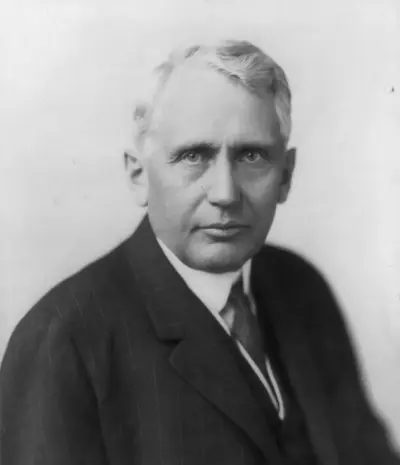
Frank Billings Kellogg was an American lawyer, politician, and statesman who served in the U.S. Senate and as U.S. Secretary of State. He co-authored the Kellogg–Briand Pact, for which he was awarded the Nobel Peace Prize in 1929.
