Robert Kennedy Quotes
I now know how Tojo felt when he was planning Pearl Harbor.
Schlesinger, Arthur M., Jr. Robert Kennedy and His Times. Houghton Mifflin, 1978.


There was a major leak of the administration’s contingency plans for war in Europe. FDR had run on a platform not to send American troops to Europe, and this leak, presented as a fete a compli, caused a political upheaval.


The State Department and the Defense Department often clash over power and control of various foreign policy activities and initiatives. Whereas secrecy is supposed to be a means of keeping critical information from the enemy, it is very frequently used to cover-up embarrassment and also to prevent a rival government agency from registering objections to ongoing programs. In the latter case the secret classification has two advantages for the agency wanting to maintain their autonomy. First, they keep the information from the rival agency for a while. Eventually, the other agency has people with secret clearance who will find out, but because the material is secret they cannot publicly discuss the wisdom of the policy of initiate a public debate.

He was describing a meeting that he and General Marshall had conducted with FDR, Secretary of State Cordell Hull and others. In less than two weeks, the Japanese would attack Pearl Harbor without any declaration of war, as Marshall had predicted.


Clausewitz’book is one of the political classics that is read bby the George by almost every national leader and senior military officer in the world. This basic principle was totally violated George W. Bush and his administration team when, in the aftermath of September 11, they ordered the invasion of Afghanistan, and then before they could get that nation stabilized, ordered the invasion of Iraq which was very successful but there was no plan for the occupation after the initial victory. The Bush administration not only did not plan the last step of either war, but they had almost no planning for the any of the steps after the initial invasions.


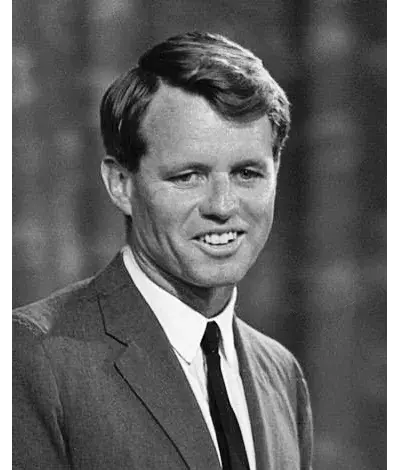
Robert Francis Kennedy, also referred to by his initials RFK or by the nickname Bobby, was an American politician and lawyer who served as the 64th United States Attorney General from January 1961 to September 1964, and as a U.S. Senator from New York from January 1965 until his assassination in June 1968. He was, like his brothers John and Edward, a prominent member of the Democratic Party and has come to be viewed by some historians as an icon of modern American liberalism.
