Desmond Tutu Quotes
I mean in the South African case, many of those who were part of death squads would have been respectable members of their white community, people who went to church on Sunday, every Sunday.
Tutu, Desmond. No Future Without Forgiveness. Doubleday, 1999.


During the slavery era, the Southern slave holders and politicians were always fearful of the possibility of slave uprisings. In most cases, they were dealt with locally with little attempt to share the information lest other slaves be motivated to follow the practice. In addition many of the slave rebellions of very small groups and individuals were not treated as a slave revolt or protest but was considered the act of a “bad apple” that was dealt with. Further, as much as the slave owners feared slave revolts, they also had a large investment in their slaves and executing all who might have supported a rebellion of a few could cost them a great deal of money or even bankrupt them. Therefore there was always a tendency to kill the leaders but provide lesser punishment for the others so that they could survive and return to work. All these factors have made it very difficult to accurately estimate the extent of slave revolts and protests in the ante-bellum South.
He was referring to slavery, poverty and degradation for most of the whites.

One of the driving forces to employ the Negro was the lower wages that they could be paid compared to white workers.


the white Southern racist system She was one of the first prominent white southerners to denounce racial segregation.

Wilson, a history and government professor and college president before politics, was has been accused of being one of the most racist Presidents since Reconstruction. Prior to his Presidency, the Federal Government had been making steady progress in hiring African Americans. Under Wilson there was a wholesale firing of a large proportion of them. Some apologists argue that his League of Nations and other major aspirations required the votes and cooperation of Southern Senators who insisted that many of the blacks be terminated. At the same time, the KKK was near the zenith of its membership and political power and was an intimidating force. Wilson’s home state of New Jersey not only had a large KKK membership but there were lynching of Blacks in his own state and when Governor and President he never asked for any anti-lynching legislation.

Historically, the Southern reaction to early 20th centry Civil Rights efforts was that it was the work of communist and anarchist radicals who were trying to destabilize America. When that argument began to be exposed as false, the next line of defense was that the southern Negro was perfectly happy in the segregated South, and the only problem was Northern liberals, black and white, who came to the South to foment trouble.

South Africa was then ruled by a white separatist, apartheid government.


Named after penal reformer Johne Howard, 1726-1790. Howard Associations have since been organized in many countries.
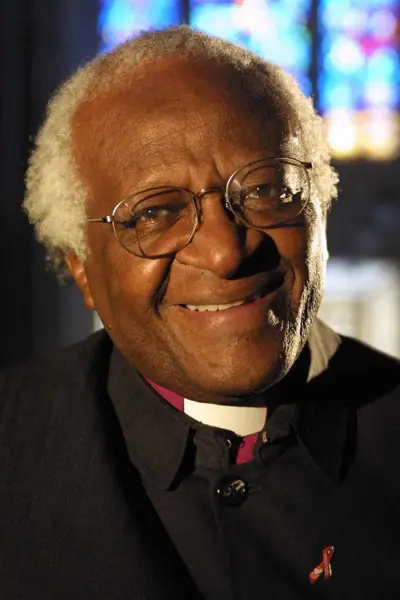
Desmond Mpilo Tutu OMSG CH GCStJ is a South African Anglican cleric and theologian, known for his work as an anti-apartheid and human rights activist. He was the Bishop of Johannesburg from 1985 to 1986 and then the Archbishop of Cape Town from 1986 to 1996, in both cases being the first black African to hold the position. Theologically, he sought to fuse ideas from black theology with African theology.
