William Blake Quotes
I love hanging and drawing and quartering
Every bit as well as war and slaughtering.
Blake, William. "I love hanging & drawing & quartering." The Complete Poetry and Prose of William Blake, edited by David V. Erdman, Anchor Books, 1988, p. 504.


Queen Boudicca of the Iceni tribe had revolted in Roman Britain. The Romans where particularly harsh in putting down revolts but under Emperor Nero and Caligula after him, they sunk to the deepest of barbarities,
Yuliy Osipovich Martov. Criticism of the Bolshevik behavior in dealing with counter-revolutionaries in the civil war that followed the Russian Revolution. This despite the fact that the death penalty had been abolished right after the Revolution. See {590510}

A Cossack revolt had broken out in 1707 and was put down by the Czar’s forces. He then issued what might be one of the first official orders for genocide. Few Cossacks survived.


Although we think is grizzley and macabre that throngs of people should attend executions adn percieve the spectators to be gross and insensitive, there was a bizarre kind of morality operating in many counties. At all times in history executions tend to bet botched with terrible and unnecessary suffering inflicted on the victim. When executioners do that with drug coctails or other methods of dispatching death, we tend to make institutional complaints. But as this quotation shows, the executioner was often turned on by the mob and in some cases were actually themselves killed.


William the Conqueror. This is one of the first if not the first nationwide abolition of capital punishment in history. Ironically, the two alternatives that the abolition law allowed would both be illegal and repugnant to us today even though we allow capital punishment.


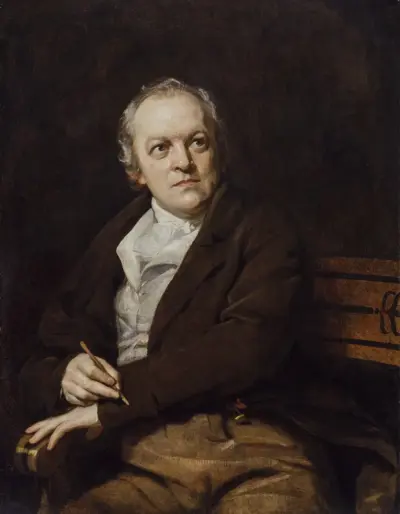
William Blake was an English poet, painter, and printmaker. Largely unrecognised during his lifetime, Blake is now considered a seminal figure in the history of the poetry and visual arts of the Romantic Age. What he called his prophetic works were said by 20th-century critic Northrop Frye to form "what is in proportion to its merits the least read body of poetry in the English language". His visual artistry led 21st-century critic Jonathan Jones to proclaim him "far and away the greatest artist Britain has ever produced". In 2002, Blake was placed at number 38 in the BBC's poll of the 100 Greatest Britons. While he lived in London his entire life, except for three years spent in Felpham, he produced a diverse and symbolically rich œuvre, which embraced the imagination as "the body of God" or "human existence itself".
