John Adams Quotes
I know not whether any man in the world has had more influence on its inhabitants or affairs for the last thirty years than Tom Paine.
This was not exactly a complement. Adams was outraged by Paine’s overt and public atheism and anti religious statements. (See {623040}.) Others of the founding fathers were also atheists but Paine wrote publicly and actively tried to persuade people of his religious position. Adams was particularly concerned because Paine was not just one of the great leaders of the American Revolution. His was the most recognized name, and a huge percentage of the American population had read his Common Sense. He was the person who was most persuasive with the mass of Americans to revolt—more so than Jefferson, Washington, Madison, Franklin or any of the other great men of the time. Because Paine was so influential, Adams thought that he should be more passive in shaking the religious faith of so many others. Actually, it was Paine’s overt atheism that has tended to diminish his influence and status given by historians throughout the ages. It also caused him some difficulty in America after the Revolution and moreso in England.
John Adams, 1735-1826, 2nd President of the United States (Federalist, MA), Letter to Benjamin Waterhouse, October 29, 1805
Sourced by: Eigen's Political and Historical Quotations


Franklin himself was a great writer and publisher. However Paine was so extraordinarily great as a writer that he not only expressed the basic ideas of the Founding Fathers and the ideals of the American Revolution better than anyone else, but his “Common Sense” was not only an intellectual, critical, political, and propaganda success, but it was the best selling publication in America. Imagine a political tract of today outselling all the novels, dictionaries and Bibles. Arguably, “Common Sense” was the greatest commercial publication in American history. No single, specific publication since has reached a greater proportion of citizens of the nation. And it was sold commercially, not given away.


Jefferson wrote more on more subjects than any other president in American history. For exa,ple, he wrote more letters during his presidency than any other president including the modern ones who had word processors and large staffs. So Jefferson wrote on almost every subject and expressed so many ideas that Lincoln could make this statement.
While we think of the Founding Fathers as great and noble men, it is interesting to consider a contemporary view of the American leadership from another leading American who chose the British side in the conflict. The British and the Loyalists suspected most of the revolutionary leaders as men who were very ambitious for personal gain and economically unsuccessful compared to many others of the then American “establishment.”


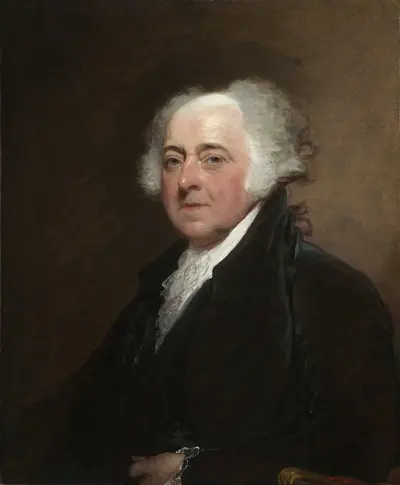
John Adams Jr. was an American statesman, attorney, diplomat, writer, and Founding Father who served as the second president of the United States from 1797 to 1801. Before his presidency, he was a leader of the American Revolution that achieved independence from Great Britain, and he served as the first vice president of the United States. Adams was a dedicated diarist and regularly corresponded with many important figures in early American history, including his wife and adviser Abigail Adams and Thomas Jefferson.
