Orson Scott Card Quotes
This is what historians usually do, quibble about cause and effect when the point is, there are times when the world is in flux and the right voice in the right place can move the world. Thomas Paine and Ben Franklin, for instance. Bismark. Lenin.
Card, Orson Scott. Ender's Game. Tor Books, 1985.

This was not exactly a complement. Adams was outraged by Paine’s overt and public atheism and anti religious statements. (See {623040}.) Others of the founding fathers were also atheists but Paine wrote publicly and actively tried to persuade people of his religious position. Adams was particularly concerned because Paine was not just one of the great leaders of the American Revolution. His was the most recognized name, and a huge percentage of the American population had read his Common Sense. He was the person who was most persuasive with the mass of Americans to revolt—more so than Jefferson, Washington, Madison, Franklin or any of the other great men of the time. Because Paine was so influential, Adams thought that he should be more passive in shaking the religious faith of so many others. Actually, it was Paine’s overt atheism that has tended to diminish his influence and status given by historians throughout the ages. It also caused him some difficulty in America after the Revolution and moreso in England.


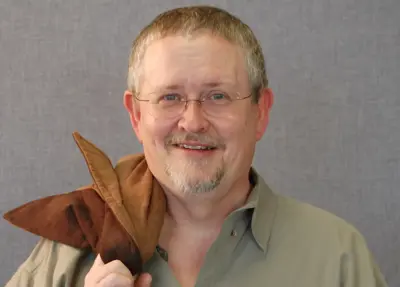
Orson Scott Card is an American writer known best for his science fiction works. His novel Ender's Game (1985) and its sequel Speaker for the Dead (1986) won both the Hugo Award and the Nebula Award. A feature film adaptation of Ender's Game, which Card co-produced, was released in 2013. Card also wrote the Locus Fantasy Award-winning series The Tales of Alvin Maker (1987–2003).
