Julia Ward Howe Quotes
I have seen him in the watchfires of a hundred circling camps They have builded him an altar in the evening dews and damps, I have read His righteous sentence by the dim and flaring lamps, His Day is marching on.
Howe, Julia Ward. "The Battle Hymn of the Republic." The Atlantic Monthly, vol. 9, no. 52, Feb. 1862, p. 145.

This great patriotic hymn was initially written as a poem and published in The Atlantic Monthly, February 1862. This last verse called for men to be willing to die to for the freedom of other men (the slaves) just as Christ had been willing to die to save men. This call was amazingly successful and struck a chord for many on the Union side for whom the Civil War was a holy war. Ironically, this powerful last verse is not familiar to most Americans who know and often sing the first verse.

The commander complained of the brutal behavior of Bolivar and the revolutionaries, but the atrocities committed by the Spanish forces were even worse and both sides fought with techniques that had no civilized restraints.
In the Civil War a drafted conscript could pay money instead of serving in the army. Many rich and middle class men did so leaving a higher proportion of the poor to be drafted. The song is sometimes misattributed to William Cullen Bryant.


The historical relationship between Greece and Turkey is as complicated as any. Ypsilantis was born in the Greek section of Istanbul, then the Turkish capital and became the military commander of the cultural Greeks in the Istanbul Turkish area in the battles between the two nations and cultures for control and dominance of the culturally Greek areas of the Ottoman Empire. So geographically he was a Turk, but always identified with Greece.

It is not known what actually happened thereafter. However, from the intensity of this letter, it is likely that unless Rice was killed or wounded in battle, he went to get his daughter and deal with her “owner”. An interesting side note is that the slave owner actually sent the letter to the Commanding Union General Rosecrans complaining. The mental set of Southern Slave Owners was incredible to us today, but that is one of the reasons that Reconstruction was so difficult. Southerners could not see anything that they did that was wrong. Unfortunately, there are a few racist people with those views still in America plus many throughout the world.

He had been urged to retreat


That is the way he was killed. The phrase, “We are bound to believe that, anyhow” indicates that Stuart really realized how futile the Southern war effort would be but loyalty and patriotism required him to suspend his rational belief structure.


This prophecy written in the later years of Jefferson’s life turned out to be all too true. St. Domingo was an Island in the Caribbean where slavery produced a bloody war. The American Civil War would be far worse.

Marx followed the American Civil War very closely. The freeing of the slaves caused an immediate social, moral and economic revolution, the results of which we live with today.

A Federal Naval flotilla was preparing to attack South Carolina Forts Beauregard and Walker in the area of Hilton Head and Port Royal. The navy took both forts the next day with their naval bombardment so powerful that the Confederate Rebels had to abandon both forts gaining a kind of revenge for the Confederate capture of Fort Sumter at the war’s beginning.
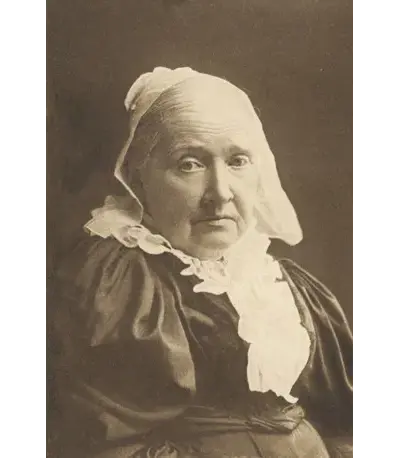
Julia Ward Howe was an American poet and author, known for writing "The Battle Hymn of the Republic" and the original 1870 pacifist Mother's Day Proclamation. She was also an advocate for abolitionism and a social activist, particularly for women's suffrage.
