David Ricardo Quotes
I have endeavoured to show that the ability to pay taxes depends, not on the gross money value of the mass of commodities, nor on the net money value of the revenue of capitalists and landlords, but on the money value of each man's revenue compared to the money value of the commodities which he usually consumes.
Ricardo, David. On the Principles of Political Economy, and Taxation. John Murray, 1817, p. 504.


The tax rates on income from working is much higher than on income generated from money which is invested. The reason for this is that the government wants economic growth and lowering the tax rate on investment profits will produce more investment which theoretically creates more jobs and strengthens the economy. However, most workers have no choice about whether they have to work. Lowering their tax rate will not induce them to work more. This not only produces a patently unfair burden on the worker compared to people who have capital to invest—usually among the wealthiest Americans. Another problem is that there are many forms of investment that does not produce any benefit for the United States. Many people invest in overseas banks, non American companies. These we tax at a low rate and all the benefits of the investment go to the foreign country.

The founder was Charles E. Coughlin, 1891-1979, a demagogic Catholic Priest who drafted the principles and invited others to join him. Hundreds of thousands did in this organization which began in idealism, and ended in scandal and hate mongering, so much so that Father Coughlin was ordered off the radio and out of politics by the Catholic Church. The National Union in 1936 had morphed into the Union Party which ran Presidential candidates in the 1936 election. At the time, a progressive income tax was an anathema to most people, however it became the norm in later years and although the idea did not originate with the Union, was one of the few lasting contributions of the Union.


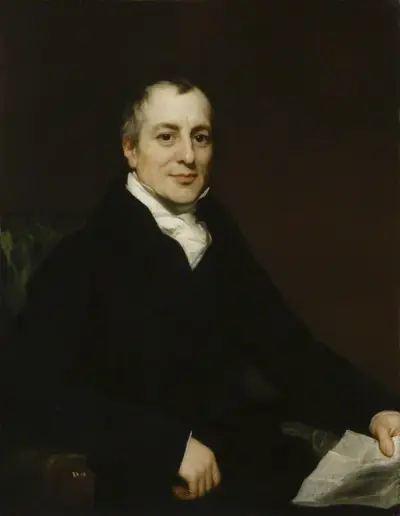
David Ricardo was a British political economist, one of the most influential of the classical economists along with Thomas Malthus, Adam Smith and James Mill. He was also a politician, and a member of the Parliament of Great Britain and Ireland.
