Frank Chodorov Quotes
At first it was the incomes of corporations, then of rich citizens, then of well-provided widows and opulent workers, and finally the wealth of housemaids and the tips of waitresses. This is all in line with the ability to pay doctrine. The poor, simply because there are more of them, have more ability to pay than the rich.
Chodorov, Frank. The Income Tax: Root of All Evil. New York: Devin-Adair Co., 1954.


Comment made in the Congressional Congress debates in 1787. This precedes individual taxation. In the debate, Wilson felt state taxation “should accord with the number of freemen” as “it is strange that annexing the name of ‘State’ to ten thousand men, should give them an equal right with forty thousand.”

FDR had as usual been attacked by the Chicago Tribune and other conservative newspapers. His assistant Raymond Moley drafted the response.


An income tax had been instituted during the Civil War but had lapsed. Existing taxes were all excise or head taxes—very regressive. Later there was a political movement to bring back the income tax with the intention of taxing all income equally. There was a titanic struggle which culminated in a Constitutional Amendment allowing the income tax. None of the original politicians, for or against, the income tax could never imagine an income tax that would charge lower rates for investment income. That was the entire purpose of the income tax at the beginning—to tax investment (unearned) income. The “capital gains tax” was the creative way of the rich getting back some of what they thought the lost when the income tax was instituted.


The founder was Charles E. Coughlin, 1891-1979, a demagogic Catholic Priest who drafted the principles and invited others to join him. Hundreds of thousands did in this organization which began in idealism, and ended in scandal and hate mongering, so much so that Father Coughlin was ordered off the radio and out of politics by the Catholic Church. The National Union in 1936 had morphed into the Union Party which ran Presidential candidates in the 1936 election. At the time, a progressive income tax was an anathema to most people, however it became the norm in later years and although the idea did not originate with the Union, was one of the few lasting contributions of the Union.

The nation rejected the flat tax that was favored by conservatives in the 1930s. However, in the Republican Presidential Primary Campaign of 2000, candidate Steve Forbes made the flat tax a centerpoint of his campaign. He lost badly, but the idea caught on amongst some conservative Republicans, and has had some support since.


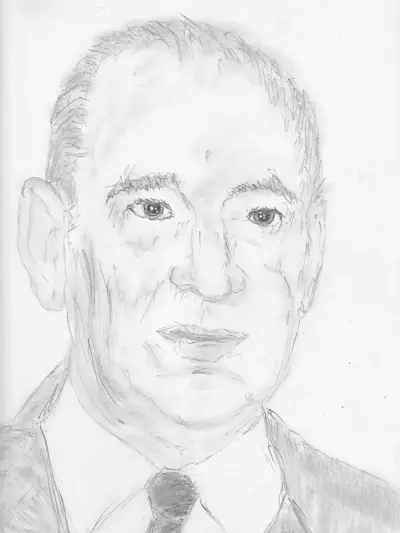
Frank Chodorov was an American member of the Old Right, a group of libertarian thinkers who were non-interventionist in foreign policy and opposed to both the American entry into World War II and the New Deal. He was called by Ralph Raico "the last of the Old Right greats."
