Albert II, Prince of Monaco Quotes
I have always respected the freedom of expression. But the dissemination of false information is lamentable and subject to criminal penalties.
Albert II, Prince of Monaco. Quoted in "Monaco's Prince Albert Slams Rumors About His Wife." The San Diego Union-Tribune, The San Diego Union-Tribune, 21 July 2011.

Usually Jefferson was the strongest voice for rights with no loopholes. However, he wanted to have a slander exception as this quote shows. However, the issue is what happens if a government official or an agency believed that it has been falsely slandered? If Jefferson’s proposal was accepted completely, the government and officials could sue someone who published negative information that they thought was false. Our supreme court has limited the exception to private parties who were NOT “public figures” unless the publisher knew the information was false and proceeded anyway for malicious reasons.
England and most other countries do not have such an exception and the press is very timid about criticizing the government or officials lest they make a mistake .
The word “printer” had a slightly different meaning then. In Jefferson’s time the printer was also the publisher, Benjamin Franklin was known as a printer but he not only published material but wrote much of it himself. This was typical. So Jefferson is concerned with the rights of the printer, the publisher and the writer.


Chairman of the Board of The Washington Post. The Attorney General had attempted to suppress information linking him to the Watergate conspiracy by threatening Washington Post staff. The story was run, and Mr. Mitchell was later convicted for his crimes in connection with Watergate.


Samuel Langhorne Clemens, 1835-1910. Grant was the victim of more journalistic errors than most politicians as a number of his appointees turned out to abuse their position for their own gain. Often, Democratic leaning newspapers would claim the Grant was aware of the corruption, sharing in it or both, When there was later proof of Grant’s non involvement, most newspapers would never publish a retraction of correction.


This principle was incorporated into American law by the Supreme Court 1964 decision in Sullivan v. New York Times, where this argument drove the opinion.


The libel and slander laws in England were then, and are today, dramatically different from those of the United States in two fundamental ways: In America truth is an absolute defense; in England you can’t say true things about people which are personally libelous. Second, in America politicians and public figures are not entitled to a verdict even if the statements are inadvertently or possibly false. Without the Constitutional protections of freedom of speech and freedom of the press, the reputations of people including public figures are given much more weight in England than in America.

The evils of the time were even worse than in modern times. Most newspapers, journals, and periodicals were in 1835 actually owned and operated by political parties or people totally identified with political parties. In modern times, there are publications and blogs which are controlled by political forces, but most are not.

In WWI Congress had passed a law that prohibited anyone from undermining or interfering with the war effort. The defendants had passed out anti-war literature to young men heading for military service. The court then overlooked the First Amendment and came up with a strange logic where the “clear and present danger” was the test of whether the First Amendment would apply. The anti war pamphleteers went to jail. Today, we look back on this and find it very surprising but this is yet another example of erosion of freedom and civil liberties when the nation is at war. By the 1950s, the Supreme Court had reversed itself and the First Amendment was restored to its original intent.
Samuel Langhorne Clemens, 1835-1910


The Masses was a left wing publication which the then Post Office officials decided were “dangerous”. Later, the Supreme Court would hold that there could not be this degree of political censorship by Post Office officials.


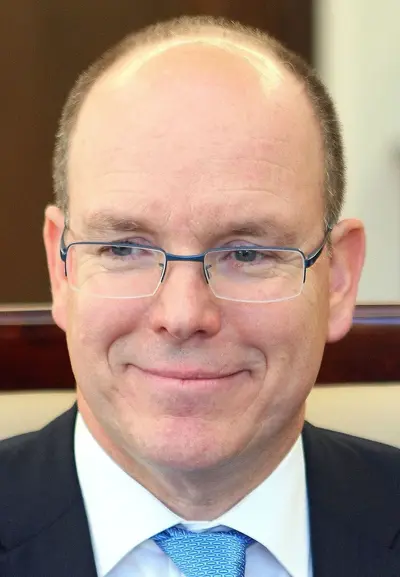
Albert II is the Sovereign Prince of Monaco and head of the Princely House of Grimaldi. He is the son of Prince Rainier III and Princess Grace.
