John Stuart Mill Quotes
Opinions lose their immunity when the circumstances in which they are expressed are such as to constitute their expression a positive instigation to some mischievous act
John Stuart Mill, 1806-1873, Member of Parliament, British Political Economist, On Liberty, 1859
Sourced by: Eigen's Political and Historical Quotations


The Grammar Curmudgeon


This famous statement is quoted in almost every debate about the limits of freedom of speech.


Explanation of the men convicted for conspiracy to murder at the Haymarket Riot of May 3, 1886.
A bomb threat was received and cell phones might be used to detonate a bomb by remote control. However, no one in the vicinity of the BART system could use their cell phones for ANY purpose. The cell phone had begun to be a major tool of protesters organizing demonstration, and many people were concerned that the police might decide that an impending demonstration was a danger to public safety and prevent demonstrators from organizing or coordinating using mobile phones. Civil libertarians argued that the police should have to get a court order and show probably cause in order to shut down a public communications system.

The 1st Amendment is almost absolute in its protection of speech. However, ironically the Untied States has much less internecine conflict with minorities better off than the nations where hate speech is illegal and criminal.


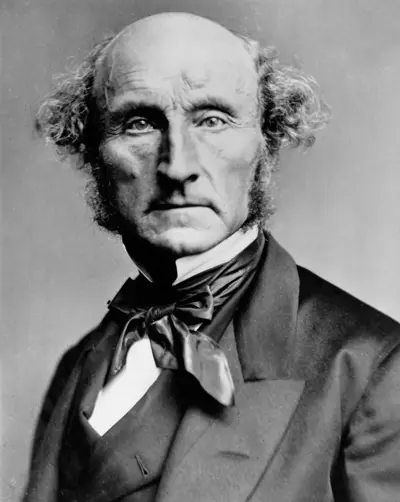
John Stuart Mill, usually cited as J. S. Mill, was an English philosopher, political economist, Member of Parliament, and civil servant. One of the most influential thinkers in the history of classical liberalism, he contributed widely to social theory, political theory, and political economy. Dubbed "the most influential English-speaking philosopher of the nineteenth century", he conceived of liberty as justifying the freedom of the individual in opposition to unlimited state and social control.
