Ludwig Wittgenstein Quotes
I feel ever more strongly the awful tragedy of our—the German race--predicament. It seems to me as good as certain that we cannot prevail against England. The English—the best race in the world—can’t lose. But we can lose and will lose, if not this year then next. The idea that our race should be beaten distresses me terribly because I am completely and utterly German.
The concept of race then was not what it is today where it is, if anything, a genetic or anthropological distinction. Then race was a combination of blood (genetics) and culture. Wittgenstein, an Austrian by nationality, considered himself German racially. This concept of race was common in 1914 and rose to be absolute in the Nazi era. So the absorption of Austria by Germany did not seem to most Austrians a diminution of anything but a natural recognition of the unity of one people—the German race. Wittgenstein was not alone among intellectual “Germans” who believed the English “race” superior. Their ability to operate a democracy without a powerful leader was considered a great strength as was the diffusion of power and control were both admirable accomplishments which some German intellectuals envied.
Ludwig Wittgenstein, 1889-1951, Austrian Philosopher October 25, 1914
Sourced by: Eigen's Political and Historical Quotations


This quotation shows the level of denial that De Valera and other Irish leaders were in over Nazi Germany. See {639721} for other Irish Free State denial. Over 70,000 Irishmen and women rejected the moral stand of their government, and volunteered for the British Army to the great distress of the Free State leaders like De Valera.

The Boers had just a few years before lost their war with the British who were then in control of South Africa. However, the British did not treat the Boers harshly in defeat and most Boers were at the time farmers and land owners who were a major force in democratic South Africa and had much invested in the nation. Others were still resentful of the British. The Boers sided with the British and fought the Germans who had troops and colonies in Africa. Like the Irish, culturally, they were always up for a good fight.


The hatred of the English was so great in Germany during WWI that this phrase substituted for the usual “Good Morning” and “Good Bye” etc.

Ataturk was a young major at the time commanding troops of a weak and corrupt Ottoman regime. However a combined English and French (the strongest military powers in Europe) invasion of the Gallipoli Peninsula threatened to capture the Turkish capital, Constantinople. Ataturk alone rallied the Turkish defenders and fought the invaders to a standoff in long drawn out battle with huge casualties on both sides. Ataturk became a national hero. Although Ataturk thereafter was very reluctant to use military force or endanger troops, the thing he always thought worth the supreme sacrifice (including his own) was the independence and sovereignty of the nation. See {584502} for his continuing belief in this type of sacrifice.


Akhito, then a very young man, had been under the tutelage of imperial and military men chosen for the task. Their racism and conviction of Japanese innate superiority persists to this day among many of the Japanese right.

When he first came to Congress, there were major American problems with both France and England who were fighting each other and punishing America for not boycotting the other nation. Many argued for peace and living with the French and English impression of American seamen and confiscation of American Cargoes. Clay and others thought the appeasement price was too high and urged war. The War of 1812 followed.

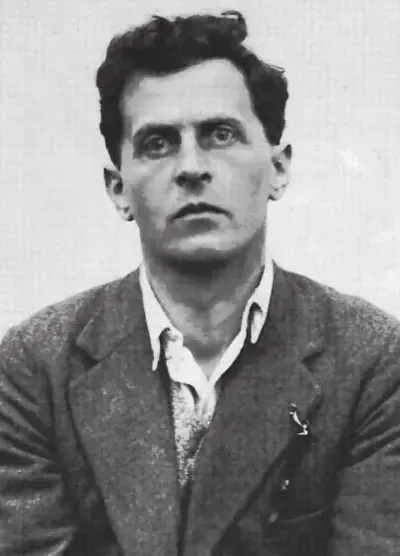
Ludwig Josef Johann Wittgenstein was an Austrian-British philosopher who worked primarily in logic, the philosophy of mathematics, the philosophy of mind, and the philosophy of language.
