Robert Runcie Quotes
War springs from the love and loyalty which should be offered to God being applied to some God substitute, one of the most dangerous being nationalism.
Runcie, Robert. Sermon at the Service of Thanksgiving for the Liberation of the Falkland Islands. 26 July 1982, St. Paul's Cathedral, London.


This quotation shows the level of denial that De Valera and other Irish leaders were in over Nazi Germany. See {639721} for other Irish Free State denial. Over 70,000 Irishmen and women rejected the moral stand of their government, and volunteered for the British Army to the great distress of the Free State leaders like De Valera.


The concept of race then was not what it is today where it is, if anything, a genetic or anthropological distinction. Then race was a combination of blood (genetics) and culture. Wittgenstein, an Austrian by nationality, considered himself German racially. This concept of race was common in 1914 and rose to be absolute in the Nazi era. So the absorption of Austria by Germany did not seem to most Austrians a diminution of anything but a natural recognition of the unity of one people—the German race. Wittgenstein was not alone among intellectual “Germans” who believed the English “race” superior. Their ability to operate a democracy without a powerful leader was considered a great strength as was the diffusion of power and control were both admirable accomplishments which some German intellectuals envied.


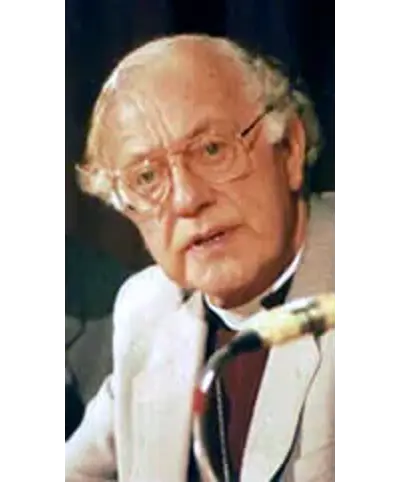
Robert Alexander Kennedy Runcie, Baron Runcie, MC, PC was an English Anglican bishop. He was the Archbishop of Canterbury from 1980 to 1991, having previously been Bishop of St Albans. He travelled the world widely to spread ecumenicism and worked to foster relations with both Protestant and Catholic churches across Europe. He was a leader of the Liberal Anglo-Catholicism movement. He came under attack for expressing compassion towards bereaved Argentines after the Falklands War of 1982, and generated controversy by supporting women's ordination.
