Amos Oz Quotes
I don't believe in binational states. There are wonderful examples of this, prosperous multinational states: Switzerland, Switzerland and Switzerland. Everywhere else - be it Cyprus, Yugoslavia or the Soviet Union, it ended in a terrible bloodbath.
Oz, Amos. How to Cure a Fanatic. Princeton University Press, 2006.


Churchill was reported to be so angry and exasperated that his face turned red and he was sputtering. During World War II, Gandhi, Nehru and other Indian Nationalists were leading protests against British control of India. This not only bogged down British soldiers surprising the nationalists rather than fighting in Burma or in other war theaters, but India supplied a huge number of battalions to the British Army the world over and if that manpower dried up, the allied war effort would suffer. The American State Department wanted Churchill to announce that after Japan was defeated, there would be a process toward self-government. This way, they thought, the Indians would redouble their effort to defeat the Japanese and stop the then current protests and strikes. Churchill was strongly opposed to any diminution of the British Empire, but beyond that, he knew India quite well and realized that at any hint of Independence the large Muslim minority in India would insist on autonomy or a partition of the country and use sectarian violence and terror to intimidate the Indian Congress party and the British, but the major victims of the terror—the Hindus and the Sikhs would not remain passive, but would retaliate in kind. President Roosevelt was in the midst of planning the Normandy Landings of the D-Day invasion and did not want to pressure Churchill and the British at this point in time, so the door to independence was not opened during the war and Britain had to deal with the protests throughout. However, when, after the war, the Labor Government, started a process toward Indian independence which resulted in exactly what Churchill predicted. At least 2 million Indians were slaughtered in the internecine terrorist cycles of fear and retaliation motivated terror attacks what were so extensive that the British military could not really control it.


Whenever different ethnicities perceive that they are in a “zero sum game” situation where one group cannot benefit without detriment to others, the situation is always unstable and usually explodes as when Yugoslavia broke apart at the end of the 20th century after being held together by a strong leader, Tito. Note that there was a different spelling of Yugoslavia in the 1920s. The pronunciation was the same.
When the former Soviet republics were in the Soviet Union, ethnic Russians were often against their will forced to the Republic so it can be Russified. These ethnic Russians had higher status with the Soviet government and the local people resented them for that and for trying to change their culture. With the breakup of the Soviet Union, many people took out their resentment on the ethnic Russians by various form of official and unofficial discrimination. For example, in 2014 when the Ukrainians revolted and ousted the pro-Russian President, the new legislature, as one of its first acts, banned the use of the Russian language on schools and in all official government forms and activities. Although the new President vetoed the ban and it never became law, the vast majority of the legislators would gladly discriminate against the ethnic Russians legally as well as socially and personally. The Russian government, decided to be the “protectors” of the ethnic Russians. This conveniently also gave them a “justification” of seizing and annexing the Crimea which had been part of Ukraine.


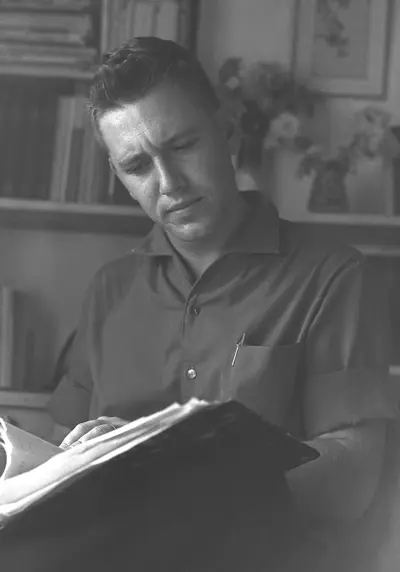
Amos Oz was an Israeli writer, novelist, journalist, and intellectual. He was also a professor of Hebrew literature at Ben-Gurion University of the Negev. From 1967 onwards, Oz was a prominent advocate of a two-state solution to the Israeli–Palestinian conflict.
