Francisco I. Madero Quotes
I declare the last election to be illegal …. And I am assuming the presidency.
He had been jailed by the corrupt dictator Diaz but escaped to the United States, where with this Declaration, the Mexican Revolution was triggered.
Francisco I. Madero, 1873 –1913, Mexican Revolutionist & President, Declaration from San Antonio, Texas, 1911
Sourced by: Eigen's Political and Historical Quotations


Actually the program had been taped earlier and on the day of broadcast, Biti had been arrested in Zimbabwe for ‘treason’ by the vicious dictator, Robert Mugabe, who had been beaten by the opposition in the election for the presidency but refused to relinquish power and in a stunning example of Biti’s point, the Electoral Commission never “officially” released the results showing that Mugabe had been defeated despite his control of all of the media, goon squads, and prohibition, intimidation and murder against opposition. See {619882}.


There are still remnants of Fascism throughout right wing and conservative circles in Europe.


He had just assumed his post 6 days earlier. At this point he did not have enough knowledge to favor or oppose the regime change, but he did realize that the decision was a serious one and there would be no turning back. Diem was a creature of the Central Intelligence Agency. An anti-Communist Christian in a Buddhist county, the CIA engineered his rise to power, created his political party, provided him with cash to bribe other Vietnamese politicians, and paid for all the propaganda so he would “win” the Presidential elections. However, he abused the Buddhists, was thoroughly corrupt and ran a corrupt administration, but worst of all from the American point of view, he was unable to motivate the South Vietnamese population to fight the Communists. He reached the point where he was more of a liability, and the Central Intelligence Agency engineered a coup d’etat to remove him from power and replace him with a President more to our liking. (See {634540}.)

Fortunately for Mexicans, this has changed but it shows that there may yet be some democratic hope for those African nations who, after independence, followed this same pattern.

20th century Africa and South America were particularly good examples.


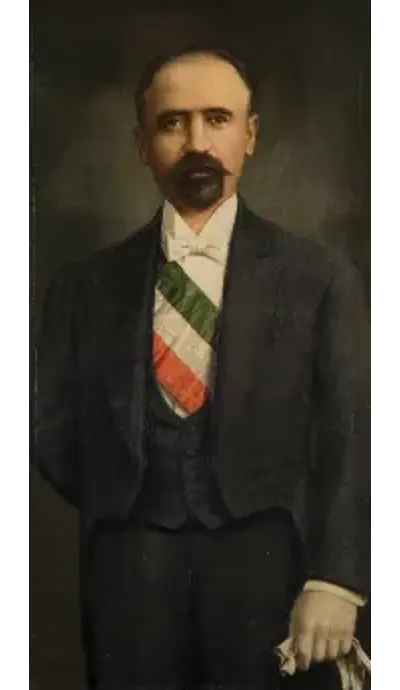
Francisco Ignacio Madero González was a Mexican revolutionary, writer and statesman who served as the 37th president of Mexico from 1911 until shortly before his assassination in 1913. A wealthy landowner, he was nonetheless an advocate for social justice and democracy. Madero was notable for challenging long-time President Porfirio Díaz for the presidency in 1910 and being instrumental in sparking the Mexican Revolution.
